Showing posts with label chant. Show all posts

Friday, December 08, 2023

A “Hail Mary Pass” for Advent

By now, your pastor has already taken the lot of you to task, for being too celebratory during the Advent season, and not delaying your "holiday parties" until right after Christmas, when everybody is the hell out of town. Well, it's time to set him straight, and I'm the arrogant son of a b**** who is just right for the job.

(Anyone remember Saint Nicholas' Day two days ago? I rest my case.)

It is possible for Christmas carols, not only to be appropriate for the penitential season of Advent, but to never mention Christmas itself. And no, that does not include "Jingle Bells."

With the Incarnation, we begin the focal point of salvation history, its end being the passion, death, and resurrection of Christ, and His ascension into Glory. And while the whole of Christendom follows, what precedes that story is what helps us to prepare.

Angelus ad Virginem

... is a 13th century carol of unknown attribution, which tells of the angel appearing to the young virgin Mary. Christians in the West remember the eighth of December as the Feast of the Immaculate Conception (known in the East as "The Conception of Saint Anne").

It is easy to forget that, while the Gospel accounts tell of the annunciation, the feast itself honors her conception without the stain of sin, rendering her a worthy vessel, if a human one, for the God made man. There is no confusion here, but indeed, a clarification. It is not only the means to the end, but the end itself, by which we celebrate this feast.

1. Angelus ad virginem
    Subintrans in conclave.
Virginis formidinum
    Demulcens inquit "Ave."
Ave regina virginum,
Coeliteraeque dominum
Concipies et paries intacta,
    Salutem hominum.
Tu porta coeli facta
    Medella criminum.

2. Quomodo conciperem,
    quae virum non cognovi?
Qualiter infringerem,
    quae firma mente vovi?
"Spiritus sancti gratia
Perficiet haec omnia;
Ne timaes, sed gaudeas, secura,
    quod castimonia
Manebit in te pura
    Dei potentia.'

3. Ad haec virgo nobilis
    Respondens inquit ei;
Ancilla sum humilis
    Omnipotentis Dei.
Tibi coelesti nuntio,
Tanta secreti conscio,
Consentiens et cupiens videre
    factum quod audio,
Parata sum parere
    Dei consilio.

4. Angelus disparuit
    Etstatim puellaris
Uterus intumuit
    Vi partus salutaris.
Qui, circumdatus utero
Novem mensium numero,
Hinc Exiit et iniit conflictum,
    Affigens humero
Crucem, qua dedit ictum
    Hosti mortifero.

5. Eia Mater Domini,
    Quae pacem reddidisti
Angelis et homini,
    Cum Christum genuisti;
Tuem exora filium
Ut se nobis propitium
Exhibeat, et deleat peccata;
    Praestans auxilium
Vita frui beta
    Post hoc exsilium.


A translation is available for your convenience, although you may get the idea. But in case you don't, a Middle English version became popular by the 14th century. (The lyrics shown here are of one such version, while the video from the King's College Choir in Cambridge sings yet another. Such is the nature of the evolution of folk songs.)

Gabriel fram Heven-King / Sent to the Maide sweete,
Broute hir blisful tiding / And fair he gan hir greete:
"Heil be thu, ful of grace aright! / For Godes Son, this Heven Light,
For mannes love / Will man bicome / And take / Fles of thee,
Maide bright, / Manken free for to make / Of sen and devles might."


Now, didn't that help?

Nova! Nova! Ave Fit Ex Eva!

By the 14th century, a livelier tune arose in the British Isles, known as "Nova! Nova! Ave Fit Ex Eva!" This was not a Latin hymn, but was popularly sung in Middle English, with its dance-like melody giving way to playing of tambourines. Video recordings of the original melody are not easy to find, in favor of more contemporary arrangements. Thankfully, the Lumina Vocal Ensemble managed a live performance in 2011.

Nova, nova. Nova, nova, Ave fit ex Eva.

Gabriel of high degree,
He came down from Trinity,
To Nazareth in Galilee.

Nova, nova ...

I met a maiden in a place,
I kneeled down afore her face
And said, "Hail Mary, full of grace!"

Nova, nova ...

When the maiden heard tell of this
She was full sore abashed y-wis
And weened that she had done amiss.

Nova, nova ...

Then said the Angel, "Dread not thou,
For ye be conceived with great virtue,
Whose name shall be called Jesu".

Nova, nova ...

"It is not yet six weeks agone
Since Elizabeth conceived John
As it was prophesied beforn."

Nova, nova ...

Then said the maiden, "Verily,
I am your servant right truly,
Ecce, ancilla Domini!"

Nova, nova ...


Its theology is explained thus:

the Virgin Mary is sometimes called the "new Eve". "Eve" in Latin is "Eva". The first word that the Angel Gabriel spoke to Mary at the Annunciation was "Ave", which is Eve backwards. This is just a coincidence of course, but many Medieval songs used this to illustrate how Mary "undid" what Eve had done. One song has this refrain:

Nova! Nova! Ave fit ex Eva! (News! News! “Ave” has been made from “Eve”!).

Thus, the obedience of Mary cured the disobedience of Eve.

And so, without any premature remembrance of the coming of the Savior, as this is indeed time of penitence, our celebration of expectation nonetheless continues, because ...

I'm on a mission from God.
 

Thursday, December 07, 2023

Keeping the “Ch” in “Chanukkah” 2023

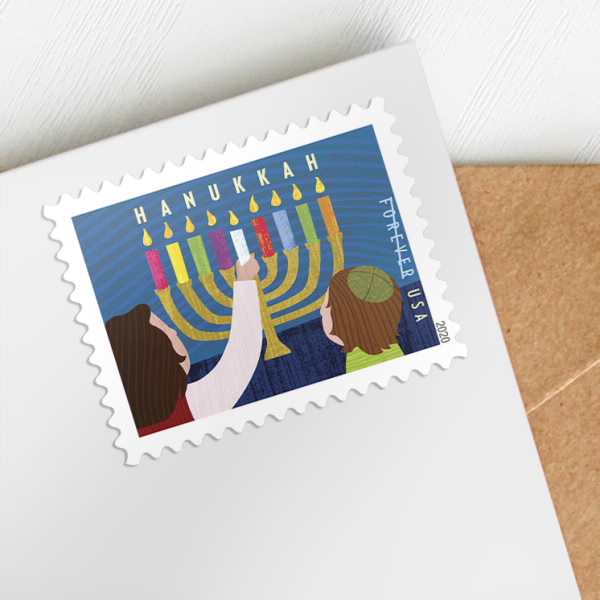
Today at sundown marks the beginning of the Jewish Festival of Lights, known as Chanukkah (also rendered as Hanukkah, and as חנוכה), which commemorates the re-dedication of the Holy Temple in Jerusalem, following the Maccabean Revolt of the 2nd century BC. It is observed for eight nights, as a reminder of the miracle of one night's supply of oil for the lamps lasting for eight, until a fresh supply could be obtained.

+    +    +

It was over twenty years ago, that the communications director of my agency at the time was a devout Jewish woman, who invited all the staff to her house in the country for a holiday celebration. A highlight of the affair was her presentation with her grandchildren, as she told them of the story of Chanukkah. As the rest of us Gentiles watched, she would lead the children in the Hebrew chant for the occasion: “Blessed art Thou, Lord our God, King of the Universe, Who sanctified us by His commandments, and has commanded us to kindle the lights of Chanukkah ...” While others stood around watching in varying degrees of perplexity, I found myself singing with the children ... well, maybe sort of following along.

I turned to my son, then in his early teens, and who was raised a Greek Catholic: "Does this sound familiar, like what you hear in the Divine Liturgy?" He nodded somewhat tentatively, as I continued. "This is where we get the Byzantine chant, and the Gregorian chant. It came to us from the Jews." His eyes lit up, as he said "Ahhhh ..."

He totally got it.

+    +    +

A comedian named Adam Sandler first introduced this holiday classic on NBC's Saturday Night Live. The song gives a list of famous celebrities from various walks of life who are Jewish: “Put on your yarmulke, here comes Hanukkah / It's so much funukkah, to celebrate Hanukkah / Hanukkah is the Festival of Lights / Instead of one day of presents, we get eight crazy nights!”

There's more where that came from.

This is an original work by Matisyahu. “Miracle” is produced by Dr Luke protégé Kool Kojak (Flo Rida, Katy Perry, Ke$ha), and is drenched in a joyful spirit, with chiming synths, bouncing beats, and an irresistible chorus. And ice skating. (A totally awesome a cappella rendition can be found here.)

There are so many Christmas songs out there. I wanted to give the Jewish kids something to be proud of. We've got Adam Sandler's song, which is hilarious, but I wanted to try to get across some of the depth and spirituality inherent in the holiday in a fun, celebratory song. My boy Kojak was in town so at the last minute we went into the studio in the spirit of miracles and underdogs and this is what we came up with. Happy Hannukah!

Matisyahu can be found on Facebook, and followed on the social media platrom formerly known as Twitter.

On a more serious note, Charlie Harare explains the origins of Chanukkah, and its meaning in daily life from a Jewish point of view, which is only reasonable as this is a Jewish holiday. This begs the question ...

+    +    +

What is there for a Catholic in this message, and why does yours truly share it every year at this time?

As a Catholic, one believes that while the Jewish people were chosen by God under the Old Covenant, that from among their number would come as the Messiah, “He came to his own home, and his own people received him not.” (John 1:11) From this, a subset of traditionalist Catholics claim that Judaism is a "false religion." They will cite the distinction between the Hebraic Judaism of the Old Testament, and the Talmudic Judaism introduced after the destruction of the Temple, accompanied by the loss of their priesthood and the practice of offering sacrifice. Some will even maintain that those who claim to be Jewish are not descendants of the original Jews up to the time of Christ.

If that were not enough, one such individual claims that Chanukkah is a hoax, a fabricated story, when in fact the account of the Maccabean Revolt is found in the First and Second Books of Maccabees. The Jews do not include these books in the Tanakh, or Jewish bible, nor are they found among the books of the Protestant Old Testament, but they are considered to be of divine inspiration by both Catholic and Orthodox Christians. One might even say, by extension, that it was the Catholic Church that saved Chanukkah for the Jews.

In fact, someone actually did say.

Jews know the fuller history of the holiday because Christians preserved the books that the Jews themselves lost. In a further twist, Jews in the Middle Ages encountered the story of the martyred mother and her seven sons anew in Christian literature and once again placed it in the time of the Maccabees.

It gets better.

As John tells us (John 10:22-23), “It was the feast of the Dedication at Jerusalem; it was winter, and Jesus was walking in the temple, in the portico of Solomon.” As we’ve seen, before Hanukkah became known as the Festival of Lights, it was known as the Feast of Dedication (1 Macc. 4:59). So there would be no question that this is the holiday being celebrated, even if John hadn’t added the clue that it was winter. And indeed, the NIV and other Protestant Bible translations acknowledge as much.

So not only is there is a case for the authenticity of the story, but more important, for the manner in which it is commemorated.

As Judaism is a sign of the Old Covenant, and Christ brought it to fulfillment in the New Covenant, to be a Catholic is to be, in effect, a fulfilled Jew. We therefore cannot rule out the possibility of something to be learned here. Judaism is not a false religion; it is an unfulfilled religion. It was -- indeed, it IS -- fulfilled in the coming of the Messiah, the Christ. As for the distinction between Hebraic and Talmudic Judaism, this only reinforces that point, as by rejecting the True Messiah, the proverbial vacuum that nature would abhor was filled by something else.

If you as a Catholic don't get that after reading all this, I can't explain it to you.
 

Sunday, December 18, 2022

Keeping the “Ch” in “Chanukkah” 2022

Today at sundown marks the beginning of the Jewish Festival of Lights, known as Chanukkah (also rendered as Hanukkah, and as חנוכה), which commemorates the re-dedication of the Holy Temple in Jerusalem, following the Maccabean Revolt of the 2nd century BC. It is observed for eight nights, as a reminder of the miracle of one night's supply of oil for the lamps lasting for eight, until a fresh supply could be obtained.

+    +    +

It was over twenty years ago, that the communications director of my agency at the time was a devout Jewish woman, who invited all the staff to her house in the country for a holiday celebration. A highlight of the affair was her presentation with her grandchildren, as she told them of the story of Chanukkah. As the rest of us Gentiles watched, she would lead the children in the Hebrew chant for the occasion: “Blessed art Thou, Lord our God, King of the Universe, Who sanctified us by His commandments, and has commanded us to kindle the lights of Chanukkah ...” While others stood around watching in varying degrees of perplexity, I found myself singing with the children ... well, maybe sort of following along.

I turned to my son, then in his early teens, and who was raised a Greek Catholic: "Does this sound familiar, like what you hear in the Divine Liturgy?" He nodded somewhat tentatively, as I continued. "This is where we get the Byzantine chant, and the Gregorian chant. It came to us from the Jews." His eyes lit up, as he said "Ahhhh ..."

He totally got it.

+    +    +

A comedian named Adam Sandler first introduced his own holiday classic on NBC's Saturday Night Live. The song gives a list of famous celebrities from various walks of life who are Jewish: “Put on your yarmulke, here comes Hanukkah / It's so much funukkah, to celebrate Hanukkah / Hanukkah is the Festival of Lights / Instead of one day of presents, we get eight crazy nights!”

There's more where that came from.

This is an original work by Matisyahu. “Miracle” is produced by Dr Luke protégé Kool Kojak (Flo Rida, Katy Perry, Ke$ha), and is drenched in a joyful spirit, with chiming synths, bouncing beats, and an irresistible chorus. And ice skating. (A totally awesome a cappella rendition can be found here.)

There are so many Christmas songs out there. I wanted to give the Jewish kids something to be proud of. We've got Adam Sandler's song, which is hilarious, but I wanted to try to get across some of the depth and spirituality inherent in the holiday in a fun, celebratory song. My boy Kojak was in town so at the last minute we went into the studio in the spirit of miracles and underdogs and this is what we came up with. Happy Hannukah!

Matisyahu can be found on Facebook, and followed on Twitter.

On a more serious note, Charlie Harare explains the origins of Chanukkah, and its meaning in daily life from a Jewish point of view, which is only reasonable as this is a Jewish holiday. This begs the question ...

+    +    +

What is there for a Catholic in this message, and why does yours truly share it every year at this time?

As a Catholic, one believes that while the Jewish people were chosen by God under the Old Covenant, that from among their number would come as the Messiah, “He came to his own home, and his own people received him not.” (John 1:11) From this, a subset of traditionalist Catholics claim that Judaism is a "false religion." They will cite the distinction between the Hebraic Judaism of the Old Testament, and the Talmudic Judaism introduced after the destruction of the Temple, accompanied by the loss of their priesthood and the practice of offering sacrifice. Some will even maintain that those who claim to be Jewish are not descendants of the original Jews up to the time of Christ.

If that were not enough, one such individual claims that Chanukkah is a hoax, a fabricated story, when in fact the account of the Maccabean Revolt is found in the First and Second Books of Maccabees. The Jews do not include these books in the Tanakh, or Jewish bible, nor are they found among the books of the Protestant Old Testament, but they are considered to be of divine inspiration by both Catholic and Orthodox Christians. One might even say, by extension, that it was the Catholic Church that saved Chanukkah for the Jews.

In fact, someone actually did say.

Jews know the fuller history of the holiday because Christians preserved the books that the Jews themselves lost. In a further twist, Jews in the Middle Ages encountered the story of the martyred mother and her seven sons anew in Christian literature and once again placed it in the time of the Maccabees.

It gets better.

As John tells us (John 10:22-23), “It was the feast of the Dedication at Jerusalem; it was winter, and Jesus was walking in the temple, in the portico of Solomon.” As we’ve seen, before Hanukkah became known as the Festival of Lights, it was known as the Feast of Dedication (1 Macc. 4:59). So there would be no question that this is the holiday being celebrated, even if John hadn’t added the clue that it was winter. And indeed, the NIV and other Protestant Bible translations acknowledge as much.

So not only is there is a case for the authenticity of the story, but more important, for the manner in which it is commemorated.

As Judaism is a sign of the Old Covenant, and Christ brought it to fulfillment in the New Covenant, to be a Catholic is to be, in effect, a fulfilled Jew. We therefore cannot rule out the possibility of something to be learned here. Judaism is not a false religion; it is an unfulfilled religion. It was -- indeed, it IS -- fulfilled in the coming of the Messiah, the Christ. As for the distinction between Hebraic and Talmudic Judaism, this only reinforces that point, as by rejecting the True Messiah, the proverbial vacuum that nature would abhor was filled by something else.

If you as a Catholic don't get that after watching this video, I can't explain it to you.
 

Thursday, December 08, 2022

A “Hail Mary Pass” for Advent

By now, your pastor has already taken the lot of you to task, for being too celebratory during the Advent season, and not delaying your "holiday parties" until right after Christmas, when everybody is the hell out of town. Well, it's time to set him straight, and I'm the arrogant son of a b**** who is just right for the job.

(Anyone remember Saint Nicholas' Day two days ago? I rest my case.)

It is possible for Christmas carols, not only to be appropriate for the penitential season of Advent, but to never mention Christmas itself. And no, that does not include "Jingle Bells."

With the Incarnation, we begin the focal point of salvation history, its end being the passion, death, and resurrection of Christ, and His ascension into Glory. And while the whole of Christendom follows, what precedes that story is what helps us to prepare.

Angelus ad Virginem

... is a 13th century carol of unknown attribution, which tells of the angel appearing to the young virgin Mary. Christians in the West remember the eighth of December as the Feast of the Immaculate Conception (known in the East as "The Conception of Saint Anne").

It is easy to forget that, while the Gospel accounts tell of the annunciation, the feast itself honors her conception without the stain of sin, rendering her a worthy vessel, if a human one, for the God made man. There is no confusion here, but indeed, a clarification. It is not only the means to the end, but the end itself, by which we celebrate this feast.

1. Angelus ad virginem
    Subintrans in conclave.
Virginis formidinum
    Demulcens inquit "Ave."
Ave regina virginum,
Coeliteraeque dominum
Concipies et paries intacta,
    Salutem hominum.
Tu porta coeli facta
    Medella criminum.

2. Quomodo conciperem,
    quae virum non cognovi?
Qualiter infringerem,
    quae firma mente vovi?
"Spiritus sancti gratia
Perficiet haec omnia;
Ne timaes, sed gaudeas, secura,
    quod castimonia
Manebit in te pura
    Dei potentia.'

3. Ad haec virgo nobilis
    Respondens inquit ei;
Ancilla sum humilis
    Omnipotentis Dei.
Tibi coelesti nuntio,
Tanta secreti conscio,
Consentiens et cupiens videre
    factum quod audio,
Parata sum parere
    Dei consilio.

4. Angelus disparuit
    Etstatim puellaris
Uterus intumuit
    Vi partus salutaris.
Qui, circumdatus utero
Novem mensium numero,
Hinc Exiit et iniit conflictum,
    Affigens humero
Crucem, qua dedit ictum
    Hosti mortifero.

5. Eia Mater Domini,
    Quae pacem reddidisti
Angelis et homini,
    Cum Christum genuisti;
Tuem exora filium
Ut se nobis propitium
Exhibeat, et deleat peccata;
    Praestans auxilium
Vita frui beta
    Post hoc exsilium.


A translation is available for your convenience, although you may get the idea. But in case you don't, a Middle English version became popular by the 14th century. (The lyrics shown here are of one such version, while the video from the King's College Choir in Cambridge sings yet another. Such is the nature of the evolution of folk songs.)

Gabriel fram Heven-King / Sent to the Maide sweete,
Broute hir blisful tiding / And fair he gan hir greete:
"Heil be thu, ful of grace aright! / For Godes Son, this Heven Light,
For mannes love / Will man bicome / And take / Fles of thee,
Maide bright, / Manken free for to make / Of sen and devles might."


Now, didn't that help?

Nova! Nova! Ave Fit Ex Eva!

By the 14th century, a livelier tune arose in the British Isles, known as "Nova! Nova! Ave Fit Ex Eva!" This was not a Latin hymn, but was popularly sung in Middle English, with its dance-like melody giving way to playing of tambourines. Video recordings of the original melody are not easy to find, in favor of more contemporary arrangements. Thankfully, the Lumina Vocal Ensemble managed a live performance in 2011.

Nova, nova. Nova, nova, Ave fit ex Eva.

Gabriel of high degree,
He came down from Trinity,
To Nazareth in Galilee.

Nova, nova ...

I met a maiden in a place,
I kneeled down afore her face
And said, "Hail Mary, full of grace!"

Nova, nova ...

When the maiden heard tell of this
She was full sore abashed y-wis
And weened that she had done amiss.

Nova, nova ...

Then said the Angel, "Dread not thou,
For ye be conceived with great virtue,
Whose name shall be called Jesu".

Nova, nova ...

"It is not yet six weeks agone
Since Elizabeth conceived John
As it was prophesied beforn."

Nova, nova ...

Then said the maiden, "Verily,
I am your servant right truly,
Ecce, ancilla Domini!"

Nova, nova ...


Its theology is explained thus:

the Virgin Mary is sometimes called the "new Eve". "Eve" in Latin is "Eva". The first word that the Angel Gabriel spoke to Mary at the Annunciation was "Ave", which is Eve backwards. This is just a coincidence of course, but many Medieval songs used this to illustrate how Mary "undid" what Eve had done. One song has this refrain:

Nova! Nova! Ave fit ex Eva! (News! News! “Ave” has been made from “Eve”!).

Thus, the obedience of Mary cured the disobedience of Eve.

And so, without any premature remembrance of the coming of the Savior, as this is indeed time of penitence, our celebration of expectation nonetheless continues, because ...

I'm on a mission from God.
 

Thursday, November 10, 2022

Proficiscere: The Catholic Way of Dying

As part of our remembrance of the month of November, as that which Catholics associate with intentions of the dead and the Life Beyond, we devote this piece to the preparation of the dying. Catholics in the health care professions, particularly those devoted to home and hospice care, may have a unique opportunity to bring their commission through Baptism to the fore. But it is no less so to friends and family of those who prepare for the Inevitable. Here at “Chez Alexandre” we have a silver troika, consisting of a crucifix between two candlesticks. When a patient under Celia's care has passed away, we recite the Psalms together while the crucifix with lit candles is on the table before us. We have found the so-called "penitential psalms" also known as the "psalms of confession" to be quite suitable. They are: Psalms 6, 31(32), 37(38), 50(51), 101(102), 129(130), and 142(143). (NOTE: The numbering system from the Latin Vulgata is given preference here. Most modern usage employs the Greek, or Septuagint numbering, which appears here in parenthesis.) Of these, Psalm 50(51), the Miserere is the most appropriate:

Have mercy on me, God, in your kindness.
    In your compassion blot out my offense.
O wash me more and more from my guilt
    And cleanse me from my sin ...

Every Catholic home should have a "sick call set" handy, for the use of the priest or deacon who visits the sick or dying. It consists of a crucifix and two candles on a white tablecloth by the bedside, along with a vial of holy water, and a dish of regular water with a small white cloth for ablutions. The use of the palm from Palm Sunday, and a bell to announce the presence of the Blessed Sacrament, is optional. It has become common to have such a set self-contained in a wall crucifix, the top portion of which can be detached, to access the accessories contained in the base. (See image at left.)

The priest who comes to the door with the Sacrament does so in silence, and should be greeted by a person carrying a lighted candle. He will say, "Pax huic dómui." ("Peace be unto this house.") The greeter should respond, "Et ómnibus habitántibus in ea." ("And all who dwell therein.") The cleric is led to the room in silence. All genuflect or kneel in the presence of the Sacrament. In the event that the patient needs to confess his sins, all must leave the room, including the primary caregiver. A priest is trained to know when other assistance is needed. In the event that the patient lacks capacity to confess, a general absolution may be given. If a priest or deacon is unavailable, the faithful are nonetheless able to help prepare a soul for the journey. A page devoted to this is found at Fisheaters.com. A prominent feature to this guide is the prayer known by its beginning word in Latin: Proficiscere.

Go forth, O Christian soul,
    out of this world,
in the Name of God the Father almighty,
    Who created you;
in the Name of Jesus Christ,
    the Son of the living God,
        Who suffered for you;
in the Name of the Holy Ghost,
    Who sanctified you ...
... may your place be this day in peace,
    and your abode in Holy Sion. Through Christ our Lord. Amen.

Of course, circumstances may dictate the length or brevity of such preparations. The communal praying of the Rosary, particularly the use of the Sorrowful Mysteries, is most commendable whatever the circumstances. Once the soul has passed on, a different set of prayers is appropriate. As the time before death is devoted to preparation, that which follows requires intercession from on high. One most appropriate form is the Responsorium, the Responsory for the Dead:

V. Do not remember my sins, O Lord.
R. When you come to judge the world by fire.

V. Direct my way in your sight, O Lord, my God.
R. When you come to judge the world by fire.

V. Eternal rest grant unto him, O Lord,
    and let your perpetual light shine upon him.
R. When you come to judge the world by fire.

V. Lord, have mercy.
R. Christ, have mercy. Lord, have mercy.

V. Our Father ...

Our series continues later this month, with a reflection on Catholic funerals, and the practices associated with them.

[As this month is when Catholics traditionally contemplate the "Last Things" -- death, judgment, heaven, hell -- we choose this opportunity to reprint an article from November of 2009. -- DLA] .

Wednesday, December 08, 2021

A “Hail Mary Pass” for Advent

By now, your pastor has already taken the lot of you to task, for being too celebratory during the Advent season, and not delaying your "holiday parties" until right after Christmas, when everybody is the hell out of town. Well, it's time to set him straight, and I'm (the arrogant son of a b**** who is) just right for the job.

(Anyone remember Saint Nicholas' Day two days ago? I rest my case.)

It is possible for Christmas carols, not only to be appropriate for the penitential season of Advent, but to never mention Christmas itself. And no, that does not include "Jingle Bells."

With the Incarnation, we begin the focal point of salvation history, its end being the passion, death, and resurrection of Christ, and His ascension into Glory. And while the whole of Christendom follows, what precedes that story is what helps us to prepare.

Angelus ad Virginem

... is a 13th century carol of unknown attribution, which tells of the angel appearing to the young virgin Mary. Christians in the West remember the eighth of December as the Feast of the Immaculate Conception (known in the East as "The Conception of Saint Anne").

It is easy to forget that, while the Gospel accounts tell of the annunciation, the feast itself honors her conception without the stain of sin, rendering her a worthy vessel, if a human one, for the God made man. There is no confusion here, but indeed, a clarification. It is not only the means to the end, but the end itself, by which we celebrate this feast.

1. Angelus ad virginem
    Subintrans in conclave.
Virginis formidinum
    Demulcens inquit "Ave."
Ave regina virginum,
Coeliteraeque dominum
Concipies et paries intacta,
    Salutem hominum.
Tu porta coeli facta
    Medella criminum.

2. Quomodo conciperem,
    quae virum non cognovi?
Qualiter infringerem,
    quae firma mente vovi?
"Spiritus sancti gratia
Perficiet haec omnia;
Ne timaes, sed gaudeas, secura,
    quod castimonia
Manebit in te pura
    Dei potentia.'

3. Ad haec virgo nobilis
    Respondens inquit ei;
Ancilla sum humilis
    Omnipotentis Dei.
Tibi coelesti nuntio,
Tanta secreti conscio,
Consentiens et cupiens videre
    factum quod audio,
Parata sum parere
    Dei consilio.

4. Angelus disparuit
    Etstatim puellaris
Uterus intumuit
    Vi partus salutaris.
Qui, circumdatus utero
Novem mensium numero,
Hinc Exiit et iniit conflictum,
    Affigens humero
Crucem, qua dedit ictum
    Hosti mortifero.

5. Eia Mater Domini,
    Quae pacem reddidisti
Angelis et homini,
    Cum Christum genuisti;
Tuem exora filium
Ut se nobis propitium
Exhibeat, et deleat peccata;
    Praestans auxilium
Vita frui beta
    Post hoc exsilium.


A translation is available for your convenience, although you may get the idea. But in case you don't, a Middle English version became popular by the 14th century. (The lyrics shown here are of one such version, while the video from the King's College Choir in Cambridge sings yet another. Such is the nature of the evolution of folk songs.)

Gabriel fram Heven-King / Sent to the Maide sweete,
Broute hir blisful tiding / And fair he gan hir greete:
"Heil be thu, ful of grace aright! / For Godes Son, this Heven Light,
For mannes love / Will man bicome / And take / Fles of thee,
Maide bright, / Manken free for to make / Of sen and devles might."


Now, didn't that help?

Nova! Nova! Ave Fit Ex Eva!

By the 14th century, a livelier tune arose in the British Isles, known as "Nova! Nova! Ave Fit Ex Eva!" This was not a Latin hymn, but was popularly sung in Middle English, with its dance-like melody giving way to playing of tambourines. Video recordings of the original melody are not easy to find, in favor of more contemporary arrangements. Thankfully, the Lumina Vocal Ensemble managed a live performance in 2011.

Nova, nova. Nova, nova, Ave fit ex Eva.

Gabriel of high degree,
He came down from Trinity,
To Nazareth in Galilee.

Nova, nova ...

I met a maiden in a place,
I kneeled down afore her face
And said, "Hail Mary, full of grace!"

Nova, nova ...

When the maiden heard tell of this
She was full sore abashed y-wis
And weened that she had done amiss.

Nova, nova ...

Then said the Angel, "Dread not thou,
For ye be conceived with great virtue,
Whose name shall be called Jesu".

Nova, nova ...

"It is not yet six weeks agone
Since Elizabeth conceived John
As it was prophesied beforn."

Nova, nova ...

Then said the maiden, "Verily,
I am your servant right truly,
Ecce, ancilla Domini!"

Nova, nova ...


Its theology is explained thus:

the Virgin Mary is sometimes called the "new Eve". "Eve" in Latin is "Eva". The first word that the Angel Gabriel spoke to Mary at the Annunciation was "Ave", which is Eve backwards. This is just a coincidence of course, but many Medieval songs used this to illustrate how Mary "undid" what Eve had done. One song has this refrain:

Nova! Nova! Ave fit ex Eva! (News! News! “Ave” has been made from “Eve”!).

Thus, the obedience of Mary cured the disobedience of Eve.

And so, without any premature remembrance of the coming of the Savior, as this is indeed time of penitence, our celebration of expectation nonetheless continues.
 

Sunday, November 28, 2021

Keeping the “Ch” in “Chanukkah” 2021

Today at sundown marks the beginning of the Jewish Festival of Lights, known as Chanukkah (also rendered as Hanukkah, and as חנוכה), which commemorates the re-dedication of the Holy Temple in Jerusalem, following the Maccabean Revolt of the 2nd century BC. It is observed for eight nights, as a reminder of the miracle of one night's supply of oil for the lamps lasting for eight, until a fresh supply could be obtained.

+    +    +

It was over twenty years ago, that the communications director of my agency at the time was a devout Jewish woman, who invited all the staff to her house in the country for a holiday celebration. A highlight of the affair was her presentation with her grandchildren, as she told them of the story of Chanukkah. As the rest of us Gentiles watched, she would lead the children in the Hebrew chant for the occasion: “Blessed art Thou, Lord our God, King of the Universe, Who sanctified us by His commandments, and has commanded us to kindle the lights of Chanukkah ...” While others stood around watching in varying degrees of perplexity, I found myself singing with the children ... well, maybe sort of following along.

I turned to my son, then in his early teens, and who was raised a Greek Catholic: "Does this sound familiar, like what you hear in the Divine Liturgy?" He nodded somewhat tentatively, as I continued. "This is where we get the Byzantine chant, and the Gregorian chant. It came to us from the Jews." His eyes lit up, as he said "Ahhhh ..."

He totally got it.

+    +    +

A comedian named Adam Sandler first introduced this holiday classic on NBC's Saturday Night Live. The song gives a list of famous celebrities from various walks of life who are Jewish: “Put on your yarmulke, here comes Hanukkah / It's so much funukkah, to celebrate Hanukkah / Hanukkah is the Festival of Lights / Instead of one day of presents, we get eight crazy nights!”

There's more where that came from.

This is an original work by Matisyahu. “Miracle” is produced by Dr Luke protégé Kool Kojak (Flo Rida, Katy Perry, Ke$ha), and is drenched in a joyful spirit, with chiming synths, bouncing beats, and an irresistible chorus. And ice skating. (A totally awesome a cappella rendition can be found here.)

There are so many Christmas songs out there. I wanted to give the Jewish kids something to be proud of. We've got Adam Sandler's song, which is hilarious, but I wanted to try to get across some of the depth and spirituality inherent in the holiday in a fun, celebratory song. My boy Kojak was in town so at the last minute we went into the studio in the spirit of miracles and underdogs and this is what we came up with. Happy Hannukah!

Matisyahu can be found on Facebook, and followed on Twitter.

On a more serious note, Charlie Harare explains the origins of Chanukkah, and its meaning in daily life from a Jewish point of view, which is only reasonable as this is a Jewish holiday. This begs the question ...

+    +    +

What is there for a Catholic in this message, and why does yours truly share it every year at this time?

As a Catholic, one believes that while the Jewish people were chosen by God under the Old Covenant, that from among their number would come as the Messiah, “He came to his own home, and his own people received him not.” (John 1:11) From this, a subset of traditionalist Catholics claim that Judaism is a "false religion." They will cite the distinction between the Hebraic Judaism of the Old Testament, and the Talmudic Judaism introduced after the destruction of the Temple, accompanied by the loss of their priesthood and the practice of offering sacrifice. Some will even maintain that those who claim to be Jewish are not descendants of the original Jews up to the time of Christ.

If that were not enough, one such individual claims that Chanukkah is a hoax, a fabricated story, when in fact the account of the Maccabean Revolt is found in the First and Second Books of Maccabees. The Jews do not include these books in the Tanakh, or Jewish bible, nor are they found among the books of the Protestant Old Testament, but they are considered to be of divine inspiration by both Catholic and Orthodox Christians. One might even say, by extension, that it was the Catholic Church that saved Chanukkah for the Jews.

In fact, someone actually did say.

Jews know the fuller history of the holiday because Christians preserved the books that the Jews themselves lost. In a further twist, Jews in the Middle Ages encountered the story of the martyred mother and her seven sons anew in Christian literature and once again placed it in the time of the Maccabees.

It gets better.

As John tells us (John 10:22-23), “It was the feast of the Dedication at Jerusalem; it was winter, and Jesus was walking in the temple, in the portico of Solomon.” As we’ve seen, before Hanukkah became known as the Festival of Lights, it was known as the Feast of Dedication (1 Macc. 4:59). So there would be no question that this is the holiday being celebrated, even if John hadn’t added the clue that it was winter. And indeed, the NIV and other Protestant Bible translations acknowledge as much.

So not only is there is a case for the authenticity of the story, but more important, for the manner in which it is commemorated.

As Judaism is a sign of the Old Covenant, and Christ brought it to fulfillment in the New Covenant, to be a Catholic is to be, in effect, a fulfilled Jew. We therefore cannot rule out the possibility of something to be learned here. Judaism is not a false religion; it is an unfulfilled religion. It was -- indeed, it IS -- fulfilled in the coming of the Messiah, the Christ. As for the distinction between Hebraic and Talmudic Judaism, this only reinforces that point, as by rejecting the True Messiah, the proverbial vacuum that nature would abhor was filled by something else.

If you as a Catholic don't get that after watching this video, I can't explain it to you.
 

Thursday, December 10, 2020

Keeping the “Ch” in “Chanukkah” 2020

Today at sundown marks the beginning of the Jewish Festival of Lights, known as Chanukkah (also rendered as Hanukkah, and as חנוכה), which commemorates the re-dedication of the Holy Temple in Jerusalem, following the Maccabean Revolt of the 2nd century BC. It is observed for eight nights, as a reminder of the miracle of one night's supply of oil for the lamps lasting for eight, until a fresh supply could be obtained.

+    +    +

It was twenty years ago, that the communications director of my agency at the time was a devout Jewish woman, who invited all the staff to her house in the country for a holiday celebration. A highlight of the affair was her presentation with her grandchildren, as she told them of the story of Chanukkah. As the rest of us Gentiles watched, she would lead the children in the Hebrew chant for the occasion: “Blessed art Thou, Lord our God, King of the Universe, Who sanctified us by His commandments, and has commanded us to kindle the lights of Chanukkah ...” While others stood around watching in varying degrees of perplexity, I found myself singing with the children ... well, maybe sort of following along.

I turned to my son, then in his early teens, and who was raised a Greek Catholic: "Does this sound familiar, like what you hear in the Divine Liturgy?" He nodded, as I continued. "This is where we get the Byzantine chant, and the Gregorian chant. It came to us from the Jews." His eyes lit up, as he said "Ahhhh ..."

He totally got it.

+    +    +

A comedian named Adam Sandler first introduced this holiday classic on NBC's Saturday Night Live. The song gives a list of famous celebrities from various walks of life who are Jewish: “Put on your yarmulke, here comes Hanukkah / It's so much funukkah, to celebrate Hanukkah / Hanukkah is the Festival of Lights / Instead of one day of presents, we get eight crazy nights!”

There's more where that came from.

This is an original work by Matisyahu. “Miracle” is produced by Dr Luke protégé Kool Kojak (Flo Rida, Katy Perry, Ke$ha), and is drenched in a joyful spirit, with chiming synths, bouncing beats, and an irresistible chorus. And ice skating. (A totally awesome a cappella rendition can be found here.)

There are so many Christmas songs out there. I wanted to give the Jewish kids something to be proud of. We've got Adam Sandler's song, which is hilarious, but I wanted to try to get across some of the depth and spirituality inherent in the holiday in a fun, celebratory song. My boy Kojak was in town so at the last minute we went into the studio in the spirit of miracles and underdogs and this is what we came up with. Happy Hannukah!

Matisyahu can be found on Facebook, and followed on Twitter.

On a more serious note, Charlie Harare explains the origins of Chanukkah, and its meaning in daily life from a Jewish point of view, which is only reasonable as this is a Jewish holiday. This begs the question ...

+    +    +

What is there for a Catholic in this message, and why does yours truly share it every year at this time?

As a Catholic, one believes that while the Jewish people were chosen by God under the Old Covenant, that from among their number would come as the Messiah, “He came to his own home, and his own people received him not.” (John 1:11) From this, a subset of traditionalist Catholics claim that Judaism is a "false religion." They will cite the distinction between the Hebraic Judaism of the Old Testament, and the Talmudic Judaism introduced after the destruction of the Temple, accompanied by the loss of their priesthood and the practice of offering sacrifice. Some will even maintain that those who claim to be Jewish are not descendants of the original Jews up to the time of Christ.

If that were not enough, one such individual claims that Chanukkah is a hoax, a fabricated story, when in fact the account of the Maccabean Revolt is found in the First and Second Books of Maccabees. The Jews do not include these books in the Tanakh, or Jewish bible, nor are they found among the books of the Protestant Old Testament, but they are considered to be of divine inspiration by both Catholic and Orthodox Christians. One might even say, by extension, that it was the Catholic Church that saved Chanukkah for the Jews.

In fact, someone actually did say.

Jews know the fuller history of the holiday because Christians preserved the books that the Jews themselves lost. In a further twist, Jews in the Middle Ages encountered the story of the martyred mother and her seven sons anew in Christian literature and once again placed it in the time of the Maccabees.

It gets better.

As John tells us (John 10:22-23), “It was the feast of the Dedication at Jerusalem; it was winter, and Jesus was walking in the temple, in the portico of Solomon.” As we’ve seen, before Hanukkah became known as the Festival of Lights, it was known as the Feast of Dedication (1 Macc. 4:59). So there would be no question that this is the holiday being celebrated, even if John hadn’t added the clue that it was winter. And indeed, the NIV and other Protestant Bible translations acknowledge as much.

So not only is there is a case for the authenticity of the story, but more important, for the manner in which it is commemorated.

As Judaism is a sign of the Old Covenant, and Christ brought it to fulfillment in the New Covenant, to be a Catholic is to be, in effect, a fulfilled Jew. We therefore cannot rule out the possibility of something to be learned here. Judaism is not a false religion; it is an unfulfilled religion. It was -- indeed, it IS -- fulfilled in the coming of the Messiah, the Christ. As for the distinction between Hebraic and Talmudic Judaism, this only reinforces that point, as by rejecting the True Messiah, the proverbial vacuum that nature would abhor was filled by something else.

If you as a Catholic don't get that after watching this video, I can't explain it to you.
 

Tuesday, December 08, 2020

A “Hail Mary Pass” for Advent

By now, your pastor has already taken the lot of you to task, for being too celebratory during the Advent season, and not delaying your "holiday parties" until right after Christmas, when everybody is the hell out of town. Well, it's time to set him straight, and I'm (the arrogant son of a b**** who is) just right for the job.

(Anyone remember Saint Nicholas' Day two days ago? I rest my case.)

It is possible for Christmas carols, not only to be appropriate for the penitential season of Advent, but to never mention Christmas itself. And no, that does not include "Jingle Bells."

With the Incarnation, we begin the focal point of salvation history, its end being the passion, death, and resurrection of Christ, and His ascension into Glory. And while the whole of Christendom follows, what precedes that story is what helps us to prepare.

Angelus ad Virginem

... is a 13th century carol of unknown attribution, which tells of the angel appearing to the young virgin Mary. Christians in the West remember the eighth of December as the Feast of the Immaculate Conception (known in the East as "The Conception of Saint Anne").

It is easy to forget that, while the Gospel accounts tell of the annunciation, the feast itself honors her conception without the stain of sin, rendering her a worthy vessel, if a human one, for the God made man. There is no confusion here, but indeed, a clarification. It is not only the means to the end, but the end itself, by which we celebrate this feast.

1. Angelus ad virginem
    Subintrans in conclave.
Virginis formidinum
    Demulcens inquit "Ave."
Ave regina virginum,
Coeliteraeque dominum
Concipies et paries intacta,
    Salutem hominum.
Tu porta coeli facta
    Medella criminum.

2. Quomodo conciperem,
    quae virum non cognovi?
Qualiter infringerem,
    quae firma mente vovi?
"Spiritus sancti gratia
Perficiet haec omnia;
Ne timaes, sed gaudeas, secura,
    quod castimonia
Manebit in te pura
    Dei potentia.'

3. Ad haec virgo nobilis
    Respondens inquit ei;
Ancilla sum humilis
    Omnipotentis Dei.
Tibi coelesti nuntio,
Tanta secreti conscio,
Consentiens et cupiens videre
    factum quod audio,
Parata sum parere
    Dei consilio.

4. Angelus disparuit
    Etstatim puellaris
Uterus intumuit
    Vi partus salutaris.
Qui, circumdatus utero
Novem mensium numero,
Hinc Exiit et iniit conflictum,
    Affigens humero
Crucem, qua dedit ictum
    Hosti mortifero.

5. Eia Mater Domini,
    Quae pacem reddidisti
Angelis et homini,
    Cum Christum genuisti;
Tuem exora filium
Ut se nobis propitium
Exhibeat, et deleat peccata;
    Praestans auxilium
Vita frui beta
    Post hoc exsilium.


A translation is available for your convenience, although you may get the idea. But in case you don't, a Middle English version became popular by the 14th century. (The lyrics shown here are of one such version, while the video from the King's College Choir in Cambridge sings yet another. Such is the nature of the evolution of folk songs.)

Gabriel fram Heven-King / Sent to the Maide sweete,
Broute hir blisful tiding / And fair he gan hir greete:
"Heil be thu, ful of grace aright! / For Godes Son, this Heven Light,
For mannes love / Will man bicome / And take / Fles of thee,
Maide bright, / Manken free for to make / Of sen and devles might."


Now, didn't that help?

Nova! Nova! Ave Fit Ex Eva!

By the 14th century, a livelier tune arose in the British Isles, known as "Nova! Nova! Ave Fit Ex Eva!" This was not a Latin hymn, but was popularly sung in Middle English, with its dance-like melody giving way to playing of tambourines. Video recordings of the original melody are not easy to find, in favor of more contemporary arrangements. Thankfully, the Lumina Vocal Ensemble managed a live performance in 2011.

Nova, nova. Nova, nova, Ave fit ex Eva.

Gabriel of high degree,
He came down from Trinity,
To Nazareth in Galilee.

Nova, nova ...

I met a maiden in a place,
I kneeled down afore her face
And said, "Hail Mary, full of grace!"

Nova, nova ...

When the maiden heard tell of this
She was full sore abashed y-wis
And weened that she had done amiss.

Nova, nova ...

Then said the Angel, "Dread not thou,
For ye be conceived with great virtue,
Whose name shall be called Jesu".

Nova, nova ...

"It is not yet six weeks agone
Since Elizabeth conceived John
As it was prophesied beforn."

Nova, nova ...

Then said the maiden, "Verily,
I am your servant right truly,
Ecce, ancilla Domini!"

Nova, nova ...


Its theology is explained thus:

the Virgin Mary is sometimes called the "new Eve". "Eve" in Latin is "Eva". The first word that the Angel Gabriel spoke to Mary at the Annunciation was "Ave", which is Eve backwards. This is just a coincidence of course, but many Medieval songs used this to illustrate how Mary "undid" what Eve had done. One song has this refrain:

Nova! Nova! Ave fit ex Eva! (News! News! “Ave” has been made from “Eve”!).

Thus, the obedience of Mary cured the disobedience of Eve.

And so, without any premature remembrance of the coming of the Savior, as this is indeed time of penitence, our celebration of expectation nonetheless continues.
 

Sunday, December 22, 2019

Keeping the “Ch” in “Chanukkah” 2019

Today at sundown marks the beginning of the Jewish Festival of Lights, known as Chanukkah (also rendered as Hanukkah, and as חנוכה), which commemorates the re-dedication of the Holy Temple in Jerusalem, following the Maccabean Revolt of the 2nd century BC. It is observed for eight nights, as a reminder of the miracle of one night's supply of oil for the lamps lasting for eight, until a fresh supply could be obtained.

+    +    +

Around the turn of this century, the director of communications at my agency was a devout Jewish woman, who invited all the staff to her house in the country for a holiday celebration. A highlight of the affair was her presentation with her grandchildren, as she told them of the story of Chanukkah. As the rest of us Gentiles watched, she would lead the children in the Hebrew chant for the occasion: “Blessed art Thou, Lord our God, King of the Universe, Who sanctified us by His commandments, and has commanded us to kindle the lights of Chanukkah ...” While others stood around watching in varying degrees of perplexity, I found myself singing with the children ... well, maybe sort of following along.

I turned to my son: "Does this sound familiar, like what you hear in the Divine Liturgy?" He nodded, as I continued. "This is where we get the Byzantine chant, and the Gregorian chant. It came to us from the Jews." His eyes lit up, as he said "Ahhhh ..." as if to indicate how he totally got it.

+    +    +

A comedian named Adam Sandler first introduced this holiday classic on NBC's Saturday Night Live. The song gives a list of famous celebrities from various walks of life who are Jewish: “Put on your yarmulke, here comes Hanukkah / It's so much funukkah, to celebrate Hanukkah / Hanukkah is the Festival of Lights / Instead of one day of presents, we get eight crazy nights!”

There's more where that came from.

This is an original work by Matisyahu. “Miracle” is produced by Dr Luke protégé Kool Kojak (Flo Rida, Katy Perry, Ke$ha), and is drenched in a joyful spirit, with chiming synths, bouncing beats, and an irresistible chorus. And ice skating. (A totally awesome a cappella rendition can be found here.)

There are so many Christmas songs out there. I wanted to give the Jewish kids something to be proud of. We've got Adam Sandler's song, which is hilarious, but I wanted to try to get across some of the depth and spirituality inherent in the holiday in a fun, celebratory song. My boy Kojak was in town so at the last minute we went into the studio in the spirit of miracles and underdogs and this is what we came up with. Happy Hannukah!

Matisyahu can be found on Facebook, and followed on Twitter.

On a more serious note, Charlie Harare explains the origins of Chanukkah, and its meaning in daily life from a Jewish point of view, which is only reasonable as this is a Jewish holiday. This begs the question ...

+    +    +

What is there for a Catholic in this message, and why does yours truly share it every year at this time?

As a Catholic, one believes that while the Jewish people were chosen by God under the Old Covenant, that from among their number would come as the Messiah, “He came to his own home, and his own people received him not.” (John 1:11) From this, a subset of traditionalist Catholics claim that Judaism is a "false religion." They will cite the distinction between the Hebraic Judaism of the Old Testament, and the Talmudic Judaism introduced after the destruction of the Temple, accompanied by the loss of their priesthood and the practice of offering sacrifice. Some will even maintain that those who claim to be Jewish are not descendants of the original Jews up to the time of Christ.

If that were not enough, one such individual claims that Chanukkah is a hoax, a fabricated story, when in fact the account of the Maccabean Revolt is found in the First and Second Books of Maccabees. The Jews do not include these books in the Tanakh, or Jewish bible, nor are they found among the books of the Protestant Old Testament, but they are considered to be of divine inspiration by both Catholic and Orthodox Christians. One might even say, by extension, that it was the Catholic Church that saved Chanukkah for the Jews.

In fact, someone actually did.

Jews know the fuller history of the holiday because Christians preserved the books that the Jews themselves lost. In a further twist, Jews in the Middle Ages encountered the story of the martyred mother and her seven sons anew in Christian literature and once again placed it in the time of the Maccabees.

It gets better.

As John tells us (John 10:22-23), “It was the feast of the Dedication at Jerusalem; it was winter, and Jesus was walking in the temple, in the portico of Solomon.” As we’ve seen, before Hanukkah became known as the Festival of Lights, it was known as the Feast of Dedication (1 Macc. 4:59). So there would be no question that this is the holiday being celebrated, even if John hadn’t added the clue that it was winter. And indeed, the NIV and other Protestant Bible translations acknowledge as much.

So not only is there is a case for the authenticity of the story, but more important, for the manner in which it is commemorated.

As Judaism is a sign of the Old Covenant, and Christ brought it to fulfillment in the New Covenant, to be a Catholic is to be, in effect, a fulfilled Jew. We therefore cannot rule out the possibility of something to be learned here. Judaism is not a false religion; it is an unfulfilled religion. It was -- indeed, it IS -- fulfilled in the coming of the Messiah, the Christ. As for the distinction between Hebraic and Talmudic Judaism, this only reinforces that point, as by rejecting the True Messiah, the proverbial vacuum that nature would abhor was filled by something else.

If you as a Catholic don't get that after watching this video, I can't explain it to you.
 

Sunday, December 08, 2019

A “Hail Mary Pass” for Advent

By now, your pastor has already taken all of you to task for being too celebratory during the Advent season, and not delaying your "holiday parties" until right after Christmas, when everybody is the hell out of town. It's time to set him straight, and I'm (the arrogant son of a b**** who is) just right for the job.

(Anyone remember Saint Nicholas' Day two days ago? I rest my case.)

It is possible for Christmas carols, not only to be appropriate for the penitential season of Advent, but to never mention Christmas itself. And no, that does not include "Jingle Bells."

With the Incarnation, we begin the focal point of salvation history, its end being the passion, death, and resurrection of Christ, and His ascension into Glory. And while the whole of Christendom follows, what precedes that story is what helps us to prepare.

Angelus ad Virginem

… is a 13th century carol of unknown attribution, which tells of the angel appearing to the young virgin Mary. Christians in the West remember the eighth of December as the Feast of the Immaculate Conception (known in the East as "The Conception of Saint Anne").

It is easy to forget that, while the Gospel accounts tell of the annunciation, the feast itself honors her conception without the stain of sin, rendering her a worthy vessel, if a human one, for the God made man. There is no confusion here, but indeed, a clarification. It is not only the means to the end, but the end itself, by which we celebrate this feast.

1. Angelus ad virginem
    Subintrans in conclave.
Virginis formidinum
    Demulcens inquit "Ave."
Ave regina virginum,
Coeliteraeque dominum
Concipies et paries intacta,
    Salutem hominum.
Tu porta coeli facta
    Medella criminum.

2. Quomodo conciperem,
    quae virum non cognovi?
Qualiter infringerem,
    quae firma mente vovi?
"Spiritus sancti gratia
Perficiet haec omnia;
Ne timaes, sed gaudeas, secura,
    quod castimonia
Manebit in te pura
    Dei potentia.'

3. Ad haec virgo nobilis
    Respondens inquit ei;
Ancilla sum humilis
    Omnipotentis Dei.
Tibi coelesti nuntio,
Tanta secreti conscio,
Consentiens et cupiens videre
    factum quod audio,
Parata sum parere
    Dei consilio.

4. Angelus disparuit
    Etstatim puellaris
Uterus intumuit
    Vi partus salutaris.
Qui, circumdatus utero
Novem mensium numero,
Hinc Exiit et iniit conflictum,
    Affigens humero
Crucem, qua dedit ictum
    Hosti mortifero.

5. Eia Mater Domini,
    Quae pacem reddidisti
Angelis et homini,
    Cum Christum genuisti;
Tuem exora filium
Ut se nobis propitium
Exhibeat, et deleat peccata;
    Praestans auxilium
Vita frui beta
    Post hoc exsilium.


A translation is available for your convenience, although you may get the idea. But in case you don't, a Middle English version became popular by the 14th century. (The lyrics shown here are of one such version, while the video from the King's College Choir in Cambridge sings yet another. Such is the nature of the evolution of folk songs.)

Gabriel fram Heven-King / Sent to the Maide sweete,
Broute hir blisful tiding / And fair he gan hir greete:
"Heil be thu, ful of grace aright! / For Godes Son, this Heven Light,
For mannes love / Will man bicome / And take / Fles of thee,
Maide bright, / Manken free for to make / Of sen and devles might."


Now, didn't that help?

Nova! Nova! Ave Fit Ex Eva!

By the 14th century, a livelier tune arose in the British Isles, known as "Nova! Nova! Ave Fit Ex Eva!" This was not a Latin hymn, but was popularly sung in Middle English, with its dance-like melody giving way to playing of tambourines. Video recordings of the original melody are not easy to find, in favor of more contemporary arrangements. Thankfully, the Lumina Vocal Ensemble managed a live performance in 2011.

Nova, nova. Nova, nova, Ave fit ex Eva.

Gabriel of high degree,
He came down from Trinity,
To Nazareth in Galilee.

Nova, nova …

I met a maiden in a place,
I kneeled down afore her face
And said, "Hail Mary, full of grace!"

Nova, nova …

When the maiden heard tell of this
She was full sore abashed y-wis
And weened that she had done amiss.

Nova, nova …

Then said the Angel, "Dread not thou,
For ye be conceived with great virtue,
Whose name shall be called Jesu".

Nova, nova …

"It is not yet six weeks agone
Since Elizabeth conceived John
As it was prophesied beforn."

Nova, nova …

Then said the maiden, "Verily,
I am your servant right truly,
Ecce, ancilla Domini!"

Nova, nova …


Its theology is explained thus:

the Virgin Mary is sometimes called the "new Eve". "Eve" in Latin is "Eva". The first word that the Angel Gabriel spoke to Mary at the Annunciation was "Ave", which is Eve backwards. This is just a coincidence of course, but many Medieval songs used this to illustrate how Mary "undid" what Eve had done. One song has this refrain:

Nova! Nova! Ave fit ex Eva! (News! News! “Ave” has been made from “Eve”!).

Thus, the obedience of Mary cured the disobedience of Eve.

And so, without any premature remembrance of the coming of the Savior, and albeit a time of penitence, our celebration of expectation continues.
 

Saturday, December 08, 2018

A “Hail Mary Pass” for Advent

By now, your pastor has already taken all of you to task for being too celebratory during the Advent season, and not delaying your "holiday parties" until right after Christmas, when everybody is the hell out of town. It's time to set him straight, and I'm (the arrogant son of a b**** who is) just right for the job.

It is possible for Christmas carols, not only to be appropriate for the penitential season of Advent, but to never mention Christmas itself. And no, that does not include "Jingle Bells."

With the Incarnation, we begin the focal point of salvation history, its end being the passion, death, and resurrection of Christ, and His ascension into Glory. And while the whole of Christendom follows, what precedes that story is what helps us to prepare.

Angelus ad Virginem

… is a 13th century carol of unknown attribution, which tells of the angel appearing to the young virgin Mary. Christians in the West remember the eighth of December as the Feast of the Immaculate Conception (known in the East as "The Conception of Saint Anne").

It is easy to forget that, while the Gospel accounts tell of the annunciation, the feast itself honors her conception without the stain of sin, rendering her a worthy vessel, if a human one, for the God made man. There is no confusion here, but indeed, a clarification. It is not only the means to the end, but the end itself, by which we celebrate this feast.

1. Angelus ad virginem
    Subintrans in conclave.
Virginis formidinum
    Demulcens inquit "Ave."
Ave regina virginum,
Coeliteraeque dominum
Concipies et paries intacta,
    Salutem hominum.
Tu porta coeli facta
    Medella criminum.

2. Quomodo conciperem,
    quae virum non cognovi?
Qualiter infringerem,
    quae firma mente vovi?
"Spiritus sancti gratia
Perficiet haec omnia;
Ne timaes, sed gaudeas, secura,
    quod castimonia
Manebit in te pura
    Dei potentia.'

3. Ad haec virgo nobilis
    Respondens inquit ei;
Ancilla sum humilis
    Omnipotentis Dei.
Tibi coelesti nuntio,
Tanta secreti conscio,
Consentiens et cupiens videre
    factum quod audio,
Parata sum parere
    Dei consilio.

4. Angelus disparuit
    Etstatim puellaris
Uterus intumuit
    Vi partus salutaris.
Qui, circumdatus utero
Novem mensium numero,
Hinc Exiit et iniit conflictum,
    Affigens humero
Crucem, qua dedit ictum
    Hosti mortifero.

5. Eia Mater Domini,
    Quae pacem reddidisti
Angelis et homini,
    Cum Christum genuisti;
Tuem exora filium
Ut se nobis propitium
Exhibeat, et deleat peccata;
    Praestans auxilium
Vita frui beta
    Post hoc exsilium.


A translation is available for your convenience, although you may get the idea. But in case you don't, a Middle English version became popular by the 14th century. (The lyrics shown here are of one such version, while the video from the King's College Choir in Cambridge sings yet another. Such is the nature of the evolution of folk songs.)

Gabriel fram Heven-King / Sent to the Maide sweete,
Broute hir blisful tiding / And fair he gan hir greete:
"Heil be thu, ful of grace aright! / For Godes Son, this Heven Light,
For mannes love / Will man bicome / And take / Fles of thee,
Maide bright, / Manken free for to make / Of sen and devles might."


Now, didn't that help?

Nova! Nova! Ave Fit Ex Eva!

By the 14th century, a livelier tune arose in the British Isles, known as "Nova! Nova! Ave Fit Ex Eva!" This was not a Latin hymn, but was popularly sung in Middle English, with its dance-like melody giving way to playing of tambourines. Video recordings of the original melody are not easy to find, in favor of more contemporary arrangements. Thankfully, the Lumina Vocal Ensemble managed a live performance in 2011.

Nova, nova. Nova, nova, Ave fit ex Eva.

Gabriel of high degree,
He came down from Trinity,
To Nazareth in Galilee.

Nova, nova …

I met a maiden in a place,
I kneeled down afore her face
And said, "Hail Mary, full of grace!"

Nova, nova …

When the maiden heard tell of this
She was full sore abashed y-wis
And weened that she had done amiss.

Nova, nova …

Then said the Angel, "Dread not thou,
For ye be conceived with great virtue,
Whose name shall be called Jesu".

Nova, nova …

"It is not yet six weeks agone
Since Elizabeth conceived John
As it was prophesied beforn."

Nova, nova …

Then said the maiden, "Verily,
I am your servant right truly,
Ecce, ancilla Domini!"

Nova, nova …


Its theology is explained thus:

the Virgin Mary is sometimes called the "new Eve". "Eve" in Latin is "Eva". The first word that the Angel Gabriel spoke to Mary at the Annunciation was "Ave", which is Eve backwards. This is just a coincidence of course, but many Medieval songs used this to illustrate how Mary "undid" what Eve had done. One song has this refrain:

Nova! Nova! Ave fit ex Eva! (News! News! “Ave” has been made from “Eve”!).

Thus, the obedience of Mary cured the disobedience of Eve.

And so, without any premature remembrance of the coming of the Savior, and albeit a time of penitence, our celebration of expectation continues.
 

Sunday, December 02, 2018

Keeping the “Ch” in “Chanukkah” 2018

Today at sundown marks the beginning of the Jewish Festival of Lights, known as Chanukkah (also rendered as Hanukkah, and as חנוכה), which commemorates the re-dedication of the Holy Temple in Jerusalem, following the Maccabean Revolt of the 2nd century BC. It is observed for eight nights, as a reminder of the miracle of one night's supply of oil for the lamps lasting for eight, until a fresh supply could be obtained.

Around the turn of this century, the director of communications at my agency was a devout Jewish woman, who invited all the staff to her house in the country for a holiday celebration. A highlight of the affair was her presentation with her grandchildren, as she told them of the story of Chanukkah. As the rest of us Gentiles watched, she would lead the children in the Hebrew chant for the occasion: “Blessed art Thou, Lord our God, King of the Universe, Who sanctified us by His commandments, and has commanded us to kindle the lights of Chanukkah ...” While others stood around watching in varying degrees of perplexity, I found myself singing with the children ... well, maybe sort of following along.

I turned to my son: "Does this sound familiar, like what you hear in the Divine Liturgy?" He nodded, as I continued. "This is where we get the Byzantine chant, and the Gregorian chant. It came to us from the Jews." His eyes lit up, as he said "Ahhhh ..." as if to indicate how he totally got it.

A comedian named Adam Sandler first introduced this holiday classic on NBC's Saturday Night Live. The song gives a list of famous celebrities from various walks of life who are Jewish: “Put on your yarmulke, here comes Hanukkah / It's so much funukkah, to celebrate Hanukkah / Hanukkah is the Festival of Lights / Instead of one day of presents, we get eight crazy nights!”

There's more where that came from.

This is an original work by Matisyahu. “Miracle” is produced by Dr Luke protégé Kool Kojak (Flo Rida, Katy Perry, Ke$ha), and is drenched in a joyful spirit, with chiming synths, bouncing beats, and an irresistible chorus. And ice skating. (A totally awesome a cappella rendition can be found here.)

There are so many Christmas songs out there. I wanted to give the Jewish kids something to be proud of. We've got Adam Sandler's song, which is hilarious, but I wanted to try to get across some of the depth and spirituality inherent in the holiday in a fun, celebratory song. My boy Kojak was in town so at the last minute we went into the studio in the spirit of miracles and underdogs and this is what we came up with. Happy Hannukah!

Matisyahu can be found on Facebook, and followed on Twitter.

On a more serious note, Charlie Harare explains the origins of Chanukkah, and its meaning in daily life from a Jewish point of view, which is only reasonable as this is a Jewish holiday. This begs the question ...

What is there for a Catholic in this message, and why does yours truly share it every year at this time?

As a Catholic, one believes that while the Jewish people were chosen by God under the Old Covenant, that from among their number would come as the Messiah, “He came to his own home, and his own people received him not.” (John 1:11) From this, a subset of traditionalist Catholics claim that Judaism is a "false religion." They will cite the distinction between the Hebraic Judaism of the Old Testament, and the Talmudic Judaism introduced after the destruction of the Temple, accompanied by the loss of their priesthood and the practice of offering sacrifice. Some will even maintain that those who claim to be Jewish are not descendants of the original Jews up to the time of Christ.

If that were not enough, one such individual claims that Chanukkah is a hoax, a fabricated story, when in fact the account of the Maccabean Revolt is found in the First and Second Books of Maccabees. The Jews do not include these books in the Tanakh, or Jewish bible, nor are they found among the books of the Protestant Old Testament, but they are considered to be of divine inspiration by both Catholic and Orthodox Christians. One might even say, by extension, that it was the Catholic Church that saved Chanukkah for the Jews.

In fact, someone actually did.

Jews know the fuller history of the holiday because Christians preserved the books that the Jews themselves lost. In a further twist, Jews in the Middle Ages encountered the story of the martyred mother and her seven sons anew in Christian literature and once again placed it in the time of the Maccabees.

It gets better.

As John tells us (John 10:22-23), “It was the feast of the Dedication at Jerusalem; it was winter, and Jesus was walking in the temple, in the portico of Solomon.” As we’ve seen, before Hanukkah became known as the Festival of Lights, it was known as the Feast of Dedication (1 Macc. 4:59). So there would be no question that this is the holiday being celebrated, even if John hadn’t added the clue that it was winter. And indeed, the NIV and other Protestant Bible translations acknowledge as much.

So not only is there is a case for the authenticity of the story, but more important, for the manner in which it is commemorated.

As Judaism is a sign of the Old Covenant, and Christ brought it to fulfillment in the New Covenant, to be a Catholic is to be, in effect, a fulfilled Jew. We therefore cannot rule out the possibility of something to be learned here. Judaism is not a false religion; it is an unfulfilled religion. It was -- indeed, it IS -- fulfilled in the coming of the Messiah, the Christ. As for the distinction between Hebraic and Talmudic Judaism, this only reinforces that point, as by rejecting the True Messiah, the proverbial vacuum that nature would abhor was filled by something else.

If you as a Catholic don't get that after watching this video, I can't explain it to you.