Showing posts with label autobiography. Show all posts

Tuesday, March 17, 2026

My Annual Über-Celtic Moment

Today we remember Saint Patrick (387-493), the patron saint of Ireland. It is on the Emerald Isle that today is both a national and religious holiday. At one time, the bars would close and the churches would be full out of obligation. Only in recent years has the feast seen a more rebellious spirit, complete with parades and green beer (not to mention green hair). Naturally (if ironically), they have the Americans to thank for this.

And, since the feast usually takes place during Lent, there are times such as a couple of years ago, when some of us are permitted on a day of abstinence to indulge a wee bit more than others. But this year it's on a Tuesday, so it's all good craic.

+    +    +

Growing up in a postwar Catholic environment, those of us who attended the parish schools in the United States, were taught that there were two kinds of people; those who were Irish, and those who wish they were. My own family appeared to fall into neither category. There were the Irish nuns who favored the Irish kids, including the unforgettable Sister Mary Mel (yes, her real name), who wasn't above calling some miscreant a "jackass" (including my kid brother, as evesdropping on a phone call with Mom gave away). But at least she was colorful. The rest of all things that were allegedly Irish were just so much blarney. I came to dismiss the whole notion of St Paddy's Day -- indeed, the whole notion of being Irish -- as a license for certain people to be more arrogant and obnoxious than they already were.

"Hail glorious Saint Patrick dear saint of our isle
On us thy poor children look down with a smile —"
But I'm not singing hymns and I'm not saying prayers
No, I'm gritting my teeth as I walk down the stairs

And into the street with these louts fiercely drinking
And screeching and lurching, and here's what I'm thinking —
They're using a stereotype, a narrow example,
A fraction, not even a marketing sample

To imitate Ireland, from which they don't come!
So unless that's just stupid, unless it's plain dumb,
All these kids from New Jersey and the five boroughs
And hundreds of cities, all drowning their sorrows,

With bottles and glasses and heads getting broken
(Believe me, just ask the mayor of Hoboken)
All that mindlessness, shouting and getting plain stocious —
That isn't Irish, that's simply atrocious.

I've another word too for it, this one's more stinging
I call it "racism." See, just 'cause you're singing
Some drunken old ballad on Saint Patrick's Day
Does that make you Irish? Oh, no — no way.

Nor does a tee-shirt that asks you to kiss them —
If they never come back I surely won't miss them
Or their beer cans and badges and wild maudlin bawling
And hammered and out of it, bodies all sprawling.

They're not of Joyce or of Yeats, Wilde, or Shaw.
How many Nobel Laureates does Dublin have? Four!
Think of this as you wince through Saint Patrick's guano.
Not every Italian is Tony Soprano.

+    +    +

Eventually I went to college, where I discovered Irish music. I mean the real thing, not the over-romanticized "Christmas-in-Killarney-on-St-Patrick's-in-June" that passed itself off as genuine the whole time, and I couldn't get enough of it. I used to watch the Saint Patrick's Day parade in Cincinnati, which included the carrying of the statue of the Saint, which the local chapter of the Ancient Order of Hibernians would "steal" in the middle of night, from what was once the German parish in Mount Adams. (Long story.) There was also the local Irish dance school, with boys and girls who never imagined that, decades later, they could do it for fame and fortune in shows like "Riverdance."

Who knew?

By the end of the 1970s I spent Sunday evenings working at a coffeehouse, and I helped broker a deal that brought Clannad to Cincinnati on their first American tour. I even gave harpist/vocalist Máire Brennan (pronounced MOY-uh) a ride back to where she was staying. Otherwise shy and aloof, I got her to laugh at my jokes. That seemed to matter at the time.

I saw Máire again in 1987, in a music video on VH1, for a song entitled "Something to Believe In." She was also the haunting voice in the Volkswagen commercials. Naturally she's world-famous now, and probably wouldn't return my calls, although she did write me a long and possibly heartfelt note when she autographed my copy of their album. I say "possibly" because it was in Gaelic, so I'll never know for sure, especially since it was among my collection that was stolen from my apartment in Georgetown back in 1994. (Bob, if you're reading this, tell your rich white trash buddies that I'd really like to have it back. And before you get your boxers in a bunch, the neighbors all thought YOU did it!) Máire also came out with a book in 2001 entitled "The Other Side of the Rainbow." She continues to tour and so on, but I knew her when.

(Sigh ...) Anyway, back to the '70s. While the whole world (including my now-beloved Celia on the other side of it) was going bananas over disco, the feast became an annual ritual, of spending most of the accompanying weekend hanging out at Hap's Irish Pub in the Hyde Park section of Cincinnati, or at Arnold's Bar and Grill downtown. Even when I moved to Washington in 1980, I learned Irish dancing (if not quite what appears in the above video), Irish folk tales, and the like. But the upscale bars in the Nation's capital weren't as quaint as the neighborhood pubs in my old hometown. I was under no illusions that this heritage was one that I could claim for my own.

In 1982, that claim became even more elusive. I married a girl whose grandparents came over from Slovakia, and who grew up hearing Slovak around the house. This pretty much killed any enthusiasm for all things Irish around our house.

You see, I learned a piece of American Catholic history that the mostly Irish-American church historians back then didn't exactly wear on their sleeves.

By the time eastern Europeans came to America in the late 19th and early 20th century, the Irish were already the big fish in the little blue-collar pond, and didn't mind letting the "Hunkies" in the coal towns and factory neighborhoods know it. Going up the food chain, it got worse. Catholics of Eastern Rites -- with customs and liturgy similar to the Orthodox, but in communion with Rome -- had married priests. The mostly-Irish bishops assumed they were either schismatics, or worse. Their wives couldn't be treated in Catholic hospitals, and their children were barred from Catholic schools. Confused as these bishops were, they concluded that the faithful would be even more confused by the presence of married Catholic priests. Thus, by the 1920s, The (mostly Irish-)American bishops pressured Rome to bar the (legitimately) married priests from coming to America, let alone ministering.

It has been shown that most of the growth of Eastern Orthodoxy in North America can be attributed to the damned ignorance of the mitred Micks at the time. (Hey, guys, nice work!)

This latency towards all things Irish got a reprieve when the marriage tanked in 1992. Then one night -- it was about 1998, as I remember -- I was interviewed for a writing job by a priest who edited a major Catholic periodical. A native of Dublin, he reminded me of what really mattered:

“Patrick was not Irish, and on his Feast Day, we do not celebrate being Irish; we celebrate being Catholic.”

I knew that the Alexanders came from a small town near Verdun, in the Lorraine province of northeastern France. But in recent years we learned that, before the 18th century, the "Alexandre" line was expatriated from Scotland, the result of the rebellion when the Scottish nationalists who were followers of the French "Bonnie Prince Charles" were defeated. I was also to learn that the man known by the Roman name of Maganus Sucatus (Maewyn Succat in Gaelic) was of a Roman family, born in Kilpatrick, near Dumbarton, in that part of Great Britain that is now Scotland. Sooooo ... if not being Irish were not enough, Patricius (in modern English, Patrick) -- as he was known in later years, being of the Roman "patrician" class, and a "patriarch" to his spiritual charges -- might just as easily be claimed by the Scots as one of their own.

+    +    +

For years, one highlight of the day was the Annual Irish Poetry Reading. That was when I'd call my folks in Ohio on this day every year, and with their speakerphone on, recite the following piece by Benjamin Hapgood Burt in my very bad Irish brogue:

One evening in October, when I was one-third sober,
    An' taking home a "load" with manly pride;
My poor feet began to stutter, so I lay down in the gutter,
    And a pig came up an' lay down by my side;
Then we sang "It's all fair weather when good fellows get together,"
    Till a lady passing by was heard to say:
"You can tell a man who 'boozes' by the company he chooses"
    And the pig got up and slowly walked away.


Since then, both have entered into eternity with better things to do.

+    +    +

Today, those who are Irish, who wish they were, or who don't give a rat's arse either way, will dine on Irish lamb stew. When I can ever find it amidst my stuff, I use this occasion to wear a button with the words of William Butler Yeats: “I will arise and go now, and go to Innisfree.” (Yes, that's the poem above.) Usually, I listen to Celtic music the entire day, and at an opportune time and place, I dine on corned beef and cabbage, an admittedly an American innovation for the Irish, as poor immigrants from the "auld sod" found corned beef (a substitute used by their Jewish neighbors in place of bacon) to be much cheaper than lamb.

Then about ten years ago, I got lucky, because right down the street from me, they opened an Irish pub. It seems that three Thai restaurants within a half mile of each other was one too many, and the one closest to me was replaced with the watering hole of my dreams. The Celtic House is situated on the corner of Columbia Pike and South Barton Street, right at the end of the latter street, which would be my street, a mere ten-minute walk away.

Earlier today, my beloved and I dined there amidst the usual record crowd, as if my fond memories of discovering real Irish culture have come full circle. True, it's not as small and crowded as Hap's in Hyde Park, not nearly as weather-beaten as Arnold's downtown, and they won't be selling raffle tickets for NORAID under the table, but I can ignore that long enough to enjoy a lamb stew, or a rueben sandwich with sauerkraut, if I'm in the mood.

I'll also probably watch Mel Gibson in Braveheart later tonight, while enjoying a Guinness float (which is like a root beer float, with the obvious exception). Who cares if William Wallace was Scottish? No one cares if Patrick isn't Irish, do they? After all, "The Apostle of Ireland" is properly claimed by Catholics everywhere, whether a bunch of Micks care to admit it or not.

“Agus fagaimid siud mar ata se.”

Saturday, January 24, 2026

Uncle Mick: An Encomium

On the thirteenth of November last year, a retired successful and wealthy businessman and entrepreneur, by the name of Michael Lampkin, passed away at his home in El Dorado Hills, California, after a long bout with leukemia. He was eighty-seven years old, surrounded by his five children, and the sounds of Neil Diamond's greatest hits.

+    +    +

The first time I met Uncle Mick, he wasn't my uncle yet. My Aunt Shirley brought him to our house on Christmas Eve in 1960. I was only in kindergarten, but Mick sat down with me, and together we speculated how long it would take for Santa Claus to deliver his goods. According to the math (in some detail for a five-year-old), the United States alone would take the entire year.

Mick married my Aunt Shirley the following year, and Mick became Uncle Mick.

He always called me "Rocky." I had no idea why. He was different from all the other uncles. He was educated, sophisticated without the attitude, and didn't treat me like a little kid. Most people did, because that's what I was. And it was small wonder. I was also a bit of a nuisance. Today, they would have said I was “on the spectrum” and put me on Ritalin for life. But to him, I was more. One time I went with him to a baseball game, and he explained the players, the strategy, everything, in detail. That was unusual in the world of an obnoxious little boy. Obnoxious little boys could only be taken in small doses.

He owned a Volkswagen "Beetle." No one I knew owned anything but an American car. But he wasn't like anyone else I knew. It was small, it was cramped in the back seat, but none of that mattered. Everything looked different; the knobs, the buttons, the arrangement, all so ... European. Imagine something that exotic, that unique, in a world of plain vanilla and white bread.

Eventually, he took his wife and five children from their home in Cincinnati, to the city of Winchester, in Virginia. He left a promising career at Procter and Gamble, for an even more promising career at Rubbermaid.

This was 1968. Virginia was in the South, and the South in those days was still very much ... well, the South. Interracial marriage ceased to be illegal in Virginia and other southern states only in the previous year, but other things took longer. It seemed that there were "no public schools" in that part of the country, only private non-sectarian schools. Only years later did I learn that racial integration was still several years away, not because of the law, but because of hearts and minds. Uncle Mick never explained why there were "no public schools" there, but on the front window by the door was a sticker that said "Open Housing Is Morally Right."

Maybe some things never needed explaining.

One night while we were staying at the house, I woke him up in the middle of the night, and asked him what he did for a living. I had little in the way of social cues back then. But instead of yelling at me to go to sleep, he stayed awake and explained to me what he did for a living. I understood little of it, but what mattered was that I mattered enought that he would stay awake long enough to explain.
Virginia was a great place to visit. I learned to play tennis that summer from the kid across the street. I listend to the radio at night, but WINC-AM, and listend to reports of riots in Chicago, and the Russians invading Prague. I couldn't imagine living in Virginia. Not yet anyway.

After a few years, Virginia wasn't enough for Uncle Mick either. He took his family and moved once again to ... Seattle, Washington! Clear across the country, to take ownership of an office supply company named Ruggles, Inc. Seattle was even farhter away. I knew nothing would be the same; not us, not him, not his family.

I was crushed.

The years went by, as they usually do. The next time I saw him was in 1986, when he and the Lampkins came by the house. I was with my first wife then, and Paul was just a baby. We sat in the living room. Well, most of us did. He was upstairs on the phone. Something was up, and there was no rest for the weary, the indispensible man. Eventually he came down and apologized for it. He was different somehow; too busy, too ... let's just settle for "different." It was a difference that affected their marriage, and after twenty-two years, Uncle Mick and Aunt Shirley divorced. Eventually the marriage was declared null and void by the Church, which left them both free to marry again.

I stayed in touch with Aunt Shirley for many years, especially during my divorce in the early 1990s. She understood me and what I endured. It was only in recent years that I renewed my contact with Uncle Mick.

As far as I was concerned, he was still my uncle. He remarried and was living in northern California. He continued to work into his seventies, possibly because he had to, but definitely because he loved his work. Not every man can say the latter, but he could, and so could I. In nearly half a century of my career, I wouldn't have settled for less.

But this love of his work was tempered in later years by regret. He wished he hadn't been quite as driven, that he spent more time with his family. His final years were not only a time of healing between himself and the children from his first marriage, but an admission that, even the breakup of a marriage declared null and void was "the biggest mistake I ever made."

+    +    +

My uncle Mick taught me that I did not have to settle for less. "1) Decide what you want in life. 2) Decide what you're willing to give up for it. 3) Go for it." It was a three-step plan that made for my best and brightest moments. It was how I became an Eagle Scout even after my father was unfairly kicked out of the troop. It was how I completed my internship in spite of gross mismanagement by the "career counselors." It was how I left the complacency of Cincinnati for a steady job in Washington. Finally, it was how I was practically alone in a room with men and women apointed by the President, and being taken seriously, of earning their respect. There were always my parents behind all this, of course, but there was still room on that short list for Uncle Mick.

As this is published, there is a "celebration of life" happening in Seattle. I was supposed to be there, until I was (shall we say?) taken over by events. But wherever he is now, he knows I was there in spirit.

He was then, and will always be, my Crackin' Rosie, my Song Sung Blue, my Sweet ... uh, you get the idea.

Monday, March 17, 2025

My Annual Über-Celtic Moment

Sorry, kids, it's on a Monday this year.

Today the Church celebrates the feast of Saint Patrick (387-493), the patron saint of Ireland. It is on the Emerald Isle that today is both a national and religious holiday. At one time, the bars would close and the churches would be full out of obligation. Only in recent years has the feast seen a more rebellious spirit, complete with parades and green beer (not to mention green hair). Naturally (if ironically), they have the Americans to thank for this.

And, since the feast usually takes place during Lent, there are times such as shown above, when some of us are permitted on a day of abstinence to indulge a wee bit more than others.

+    +    +

Growing up in a postwar Catholic environment, those of us who attended the parish schools in the United States, were taught that there were two kinds of people; those who were Irish, and those who wish they were. My own family appeared to fall into neither category. There were the Irish nuns who favored the Irish kids, including the unforgettable Sister Mary Mel (yes, her real name), who wasn't above calling some miscreant a "jackass" (including my kid brother, as evesdropping on a phone call with Mom gave away).

But hey, at least she was colorful.

The rest of all things that were allegedly Irish were just so much blarney. I came to dismiss the whole notion of St Paddy's Day -- indeed, the whole notion of being Irish -- as a license for certain people to be more arrogant and obnoxious than they already were.

"Hail glorious Saint Patrick dear saint of our isle
On us thy poor children look down with a smile —"
But I'm not singing hymns and I'm not saying prayers
No, I'm gritting my teeth as I walk down the stairs

And into the street with these louts fiercely drinking
And screeching and lurching, and here's what I'm thinking —
They're using a stereotype, a narrow example,
A fraction, not even a marketing sample

To imitate Ireland, from which they don't come!
So unless that's just stupid, unless it's plain dumb,
All these kids from New Jersey and the five boroughs
And hundreds of cities, all drowning their sorrows,

With bottles and glasses and heads getting broken
(Believe me, just ask the mayor of Hoboken)
All that mindlessness, shouting and getting plain stocious —
That isn't Irish, that's simply atrocious.

I've another word too for it, this one's more stinging
I call it "racism." See, just 'cause you're singing
Some drunken old ballad on Saint Patrick's Day
Does that make you Irish? Oh, no — no way.

Nor does a tee-shirt that asks you to kiss them —
If they never come back I surely won't miss them
Or their beer cans and badges and wild maudlin bawling
And hammered and out of it, bodies all sprawling.

They're not of Joyce or of Yeats, Wilde, or Shaw.
How many Nobel Laureates does Dublin have? Four!
Think of this as you wince through Saint Patrick's guano —
Not every Italian is Tony Soprano.

Eventually I went to college, where I discovered Irish music. I mean the real thing, not the over-romanticized "Christmas-in-Killarney-on-St-Patrick's-in-June" that passed itself off as genuine the whole time, and I couldn't get enough of it. I used to watch the Saint Patrick's Day parade in Cincinnati, which included the carrying of the statue of the Saint, which the local chapter of the Ancient Order of Hibernians would "steal" in the middle of night, from what was once the German parish in Mount Adams. (Long story.) There was also the local Irish dance school, with boys and girls who never imagined that, decades later, they could do it for fame and fortune in shows like "Riverdance."

Who knew?

By the end of the 1970s I spent Sunday evenings working at a coffeehouse, and I helped broker a deal that brought Clannad to Cincinnati on their first American tour. I even gave harpist/vocalist Máire Brennan (pronounced MOY-uh) a ride back to where she was staying. Otherwise shy and aloof, I got her to laugh at my jokes. That seemed to matter at the time.

I saw Máire again in 1987, in a music video on VH1, for a song entitled "Something to Believe In." She was also the haunting voice in the Volkswagen commercials. Naturally she's world-famous now, and probably wouldn't return my calls, although she did write me a long and possibly heartfelt note when she autographed my copy of their album. I say "possibly" because it was in Gaelic, so I'll never know for sure, especially since it was among my collection that was stolen from my apartment in Georgetown back in 1994.

(Bob, if you're reading this, tell your rich white trash buddies that I'd really like to have it back. And before you get your boxers in a bunch, the neighbors all thought YOU did it!)


Máire also came out with a book in 2001 entitled "The Other Side of the Rainbow." She continues to tour and so on, but I knew her when.

(Sigh ...) Anyway, back to the '70s.

While the whole world (including my now-beloved Celia on the other side of it) was going bananas over disco, the feast became an annual ritual, of spending most of the accompanying weekend hanging out at Hap's Irish Pub in the Hyde Park section of Cincinnati, or at Arnold's Bar and Grill downtown. Even when I moved to Washington in 1980, I learned Irish dancing (if not quite what appears in the above video), Irish folk tales, and the like. But the upscale bars in the Nation's capital weren't as quaint as the neighborhood pubs in my old hometown. I was under no illusions that this heritage was one that I could claim for my own.

In 1982, that claim became even more elusive. I married a girl whose grandparents came over from Slovakia, and who grew up hearing Slovak around the house. This pretty much killed any enthusiasm for all things Irish around our house.

You see, I learned a piece of American Catholic history that the mostly Irish-American church historians didn't exactly wear on their sleeves.

By the time eastern Europeans came to America in the late 19th and early 20th century, the Irish were already the big fish in the little blue-collar pond, and didn't mind letting the "Hunkies" in the coal towns and factory neighborhoods know it. Going up the food chain, it got worse. Catholics of Eastern Rites -- with customs and liturgy similar to the Orthodox, but in communion with Rome -- had married priests. The mostly-Irish bishops assumed they were either schismatics, or worse. Their wives were barred from treatment in Catholic hospitals, and their children were barred from Catholic schools. Confused as these bishops were, they concluded that the faithful would be even more confused by the presence of married Catholic priests. Thus, by the 1920s, The (Irish-)American bishops pressured Rome to bar the (legitimately) married priests from coming to America, let alone ministering.

It has been shown that most of the growth of Eastern Orthodoxy in North America can be attributed to the damned ignorance of the (Irish-)American bishops of the time. (Hey, Mickey, nice work!)

This latency towards all things Irish got a reprieve when the marriage tanked in 1992. Then one night -- it was about 1998, as I remember -- I was interviewed for a writing job by a priest who edited a major Catholic periodical. A native of Dublin, he reminded me of what really mattered:

“Patrick was not Irish, and on his Feast Day, we do not celebrate being Irish; we celebrate being Catholic.”

I knew that the Alexanders came from a small town near Verdun, in the Lorraine province of northeastern France. But in recent years we learned that, before the 18th century, the Alexandre line was expatriated from Scotland, a result of the Rebellion when England overtook them. I was also to learn that the man known by the Roman name of Maganus Sucatus (Maewyn Succat in Gaelic) was of a Roman family, born in Kilpatrick, near Dumbarton, in that part of Great Britain that is now Scotland.

Sooooo ... if not being Irish were not enough, Patricius (in modern English, Patrick) -- as he was known in later years, being of the Roman "patrician" class, and a "patriarch" to his spiritual charges -- might just as easily be claimed by the Scots as one of their own.

For years, one highlight of the day would be the Annual Irish Poetry Reading. That was when I'd call my folks in Ohio on this day every year, and with their speakerphone on, recite the following piece by Benjamin Hapgood Burt in a very bad Irish brogue:

One evening in October, when I was one-third sober,
    An' taking home a "load" with manly pride;
My poor feet began to stutter, so I lay down in the gutter,
    And a pig came up an' lay down by my side;
Then we sang "It's all fair weather when good fellows get together,"
    Till a lady passing by was heard to say:
"You can tell a man who 'boozes' by the company he chooses"
    And the pig got up and slowly walked away.


Since then, both have entered into eternity, most likely with better things to do.

Today, those who are Irish, who wish they were, or who don't give a rat's arse either way, will dine on Irish lamb stew. When I can ever find it amidst my stuff, I use this occasion to wear a button with the words of William Butler Yeats: “I will arise and go now, and go to Innisfree.” Usually, I listen to Celtic music the entire day, and at an opportune time and place, I dine on corned beef and cabbage. This is admittedly an American innovation for the Irish, as poor immigrants from the "auld sod" found corned beef (a substitute used by their Jewish neighbors in place of bacon) to be much cheaper than lamb.

Then about eight or nine years ago, I got lucky, because right down the street from me, they opened an Irish pub. It seems that three Thai restaurants within a half mile of each other was one too many, and the one closest to me was replaced with the watering hole of my dreams. The Celtic House is situated on the corner of Columbia Pike and South Barton Street, right on the corner, a mere five-or-ten-minute walk away from my home on South Barton. Sometime today I'm making a point of being there, as if my fond memories of discovering real Irish culture have come full circle. True, it's not as small and crowded as Hap's Irish Pub in Hyde Park, not nearly as weather-beaten as Arnold's downtown, and they won't be selling raffle tickets for NORAID under the table, but I can ignore that long enough to enjoy a lamb stew.

I'll also probably watch Mel Gibson in Braveheart later tonight, while enjoying a Guinness float (which is like a root beer float, except you have Guinness, right?). Who cares if William Wallace was Scottish? No one cares if Patrick isn't Irish, do they? After all, "The Apostle of Ireland" is properly claimed by Catholics everywhere, whether a bunch of Micks care to admit it or not.

“Agus fagaimid siud mar ata se.”

Monday, January 20, 2025

Me and the President's Men

As this is published, the Honorable Donald John Trump is being sworn in as the Forty-Seventh President of the United States. Most of you will be glued to your screens to watch the formalities, even those who came from out of town to see it before it got moved indoors (for the first time since Reagan's second inauguration forty years earlier).

I remember the first time I met Donald Trump -- well, sort of.

Along the stretch of Pennsylvania Avenue, in Washington DC, is the Old Post Office and Clock Tower. Construction began in 1892, and was completed in 1899, and was the main post office in the Nation's capital until 1914. In recent years, after being saved from near destruction, the government made numerous attempts to find a sustaining purpose for the building. None seemed to work.

Then in 2013, Donald Trump wanted a hotel in the heart of the city. And he wanted it to make one out of that historic building.

But first, he had to go through a government agency known as the General Services Administration (GSA), which is the building manager, purchasing agent, and IT acquisition manager of the Federal government. It is also where I worked for more than forty years before my retirement in July of 2022.

No, I've never mentioned before, in public social media, where I worked in the federal government. Yes, because I'm retired, it can now be told.

I was with the communications staff of GSA. By the early 2010s, I had already transitioned from graphic design and publishing to video production and photography. The leasing of the historic building to "DJT Holdings LLC" was to be highlighted by a grand ceremony involving the turning over of the keys. After spending over an hour convincing a bunch of rent-a-cops that we belonged there, we started setting up cameras and microphones and the whole nine yards. It was a hot summer day, which didn't make it any easier.

As preparations began, there he was along the mezzanine, speaking with three of the men for whom I worked, all of whom stood there, as mesmerized as I might have been. There I saw a man, the author of "The Art of the Deal" and as big as life, a man sure of his destiny in life, a destiny that called to him to grab unto himself that which was his. I never was impressed with his television appearances on "The Apprentice" or anywhere else, but seeing him there was enough to convince me, that yes, he was larger than life.

I operated the camera in front of the podium. I also did the editing of the video you see here, and worked with Judy, who did the voiceover, and with whom I got it uploaded to the server just before the deadline.

Fast forward to 2016.

The race was between Donald Trump and Hillary Clinton. I didn't care for either of them. A wise priest told me that "the lesser of two evils is still an evil." And after years of choosing between an unsuitable candidate, and an uninspiring candidate, I was considering staying away from the polls that year, abstaining from the first presidential election since I was eligible to vote in one in 1976.

But fate intervened, and I found myself five hundred miles west of my precinct on Election Day, to bury my mother, who had passed into eternity only two days before.

It so happens that the GSA, however obscure to those not on the federal payroll, has a little-known but very critical role during the change of the executive office of the President. After an election, the Administrator of General Services has the power to determine, as a matter of statutory law, and in advance of formal determination by the Electoral College, the presumptive victor of the presidential election, followed by the handing over of any funds or facilities necessary for the transition to complete its ... well, transitioning.

It is rarely a controversial matter, except maybe once.

I was a graphic designer (or "Visual Information Specialist GS-1084") for most of my career, beginning in December of 1980. After completing diploma studies for Web Design and Interactive Media at the Art Institute of Washington from 2004 to 2009, I learned that my agency did not require an additional web designer after all (so I didn't complain that they paid for most of it). Meanwhile, I learned that animation software (Adobe After Effects) was very similar to video editing software (Final Cut Pro, later Adobe Premiere Pro). I had also studied photography in college, so that was my way into a new field. Eventually, I was transferred to Video Production (as an "Audiovisual Production Specialist GS-1071").

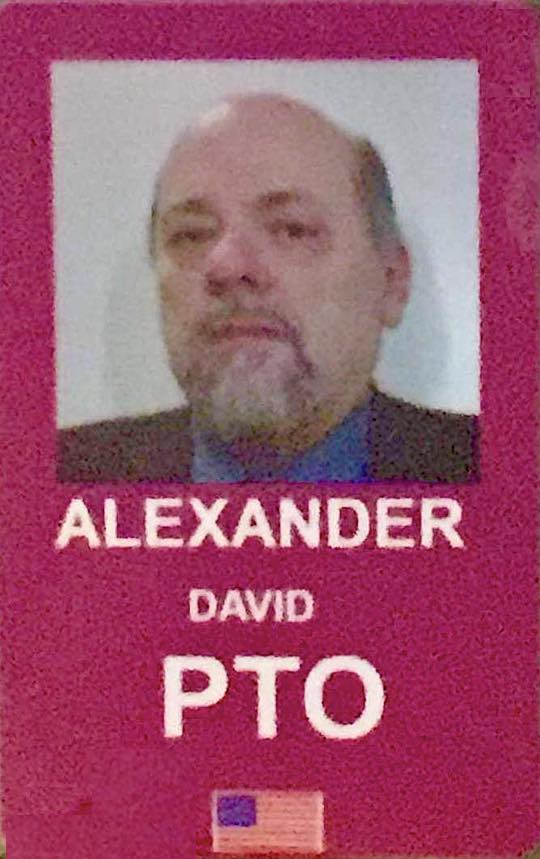
My director assigned me to be vetted by the US Secret Service, and I had access to the secured wing of our building that was used by the Transition. I was told to wear a suit every day (which I would have done anyway). I had to have special identification card to wear, opposite the agency credentials, to wear within the secure area, and to hide the minute we left said area, so as to avoid surprise inquiries from the press (and until then, admonished only to say "no comment").

One of my first assignments was to photograph the provisional office spaces for the President-Elect, the Vice President-Elect, and the "First Spouse" and "Second Spouse." Yes, they each got their own, whether they used them or not. During this time, I was given my own personal Secret Service agent. His name was Steve, he wore tactical gear, and he carried a really big gun.

The Vice President-elect and his wife eventually used their offices. The other couple, not so much.

The President-elect must appoint several thousand men and women to various policy positions throughout the executive branch. The key apppintees -- those who would head the various cabinet departments and agencies -- must be approved by the Congress. Their previous official portraits might contain backdrops that render them unsuitable, so they must have new ones, with only the American flag in the background. That's where my director and I came in.

And so, I got to meet some of the key appointments, at times even being practically alone in the room with them.

Among the first was South Carolina Governor Nimarata Nikki Randhawa Haley, aka Nikki Haley, as Ambassador-designate to the United Nations. She was the most distant of all of them -- my director took care of her, while I adjusted the lighting -- and she had the largest entourage of all of them, at least three staff members, and two plainclothes South Carolina state troopers. The police guys were pretty cool, the others eager to please en route to the UN. But to her credit, shw was also the most photogenic -- my director said she practically took her own photo.

I did the official photos of so many of them, but a few out of all of them were memorable.

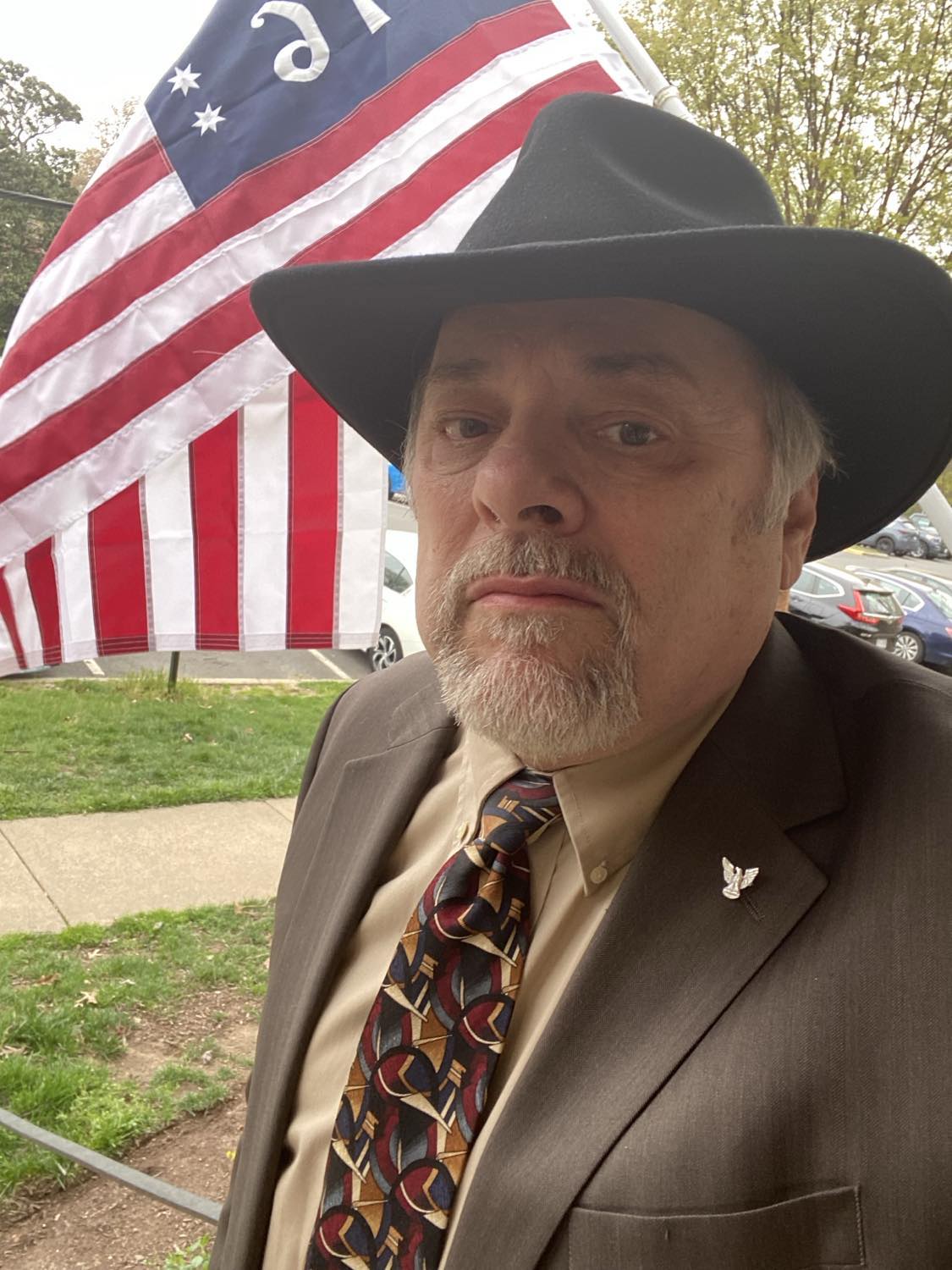
There was General John Francis Kelly, USMC, as Secretary-designate of Homeland Security (later White House Chief of Staff). He noticed the Eagle Scout insignia on my suit lapel -- yes, I made a point of wearing that one -- which he was quick to notice. He pointed to it and told me "that's a really big deal." After the session was done, he made his selection, and said it again: "That's a really big deal."

I didn't know what he meant at the time, but it occurred to me later. In some branches of the Armed Services, Eagle Scouts get a bump in rank by the time they complete basic training. And why? Because they know stuff before they even get off the bus; how to pack gear, how to hike, how to set up camp, how to track, how to cook meals in the field, how to shoot guns, how to treat basic wounds, how to carry the wounded, how to jump in water over one's head to save someone else's life, all the while risking one's life, and so on.

Yeah, that is "a really big deal." I thanked him for that.

Then there was Rex Tillerson, Secretary-designate of State, and former President of the Boy Scouts of America (2010-2012). I would seldom speak to the subjects unless spoken to. In this case, when it was over, I leaned in and said: "From one Eagle to another, good luck, sir." He responded with that characteristic Texas drawl. "Yeah, it sure meant a lot to me back then."

Most of the appointees were just here for the day, and would be shuffled from one meeting to another, and I was lucky to get five or ten minutes with them, not a lot of time for do-overs. I didn't need do-overs. But there was one notable exception.

No, not for do-overs. Bear with me.

James Richard Perry was the immediate past Governor of Texas, and Secretary-designate of Energy. He noticed my lapel pin immediately, came up and shook my hand, and identified himself as a brother Eagle. We spent at least five or ten minutes just comparing notes, how his Class of 1965 was the last class of Eagles without the mandatory service requirement, how mine as one of the Class of 1971 would never pass muster today, that the National Council of BSA realized they couldn't buy the kind of publicity these service projects gave them. He was sincerely fascinated by this.

After the session was over, he wanted to see my camera. I thought he wanted to pick his choice. No, he wanted to check out that big 200x piece of glass I had for a lens. It seems that photography is another of his hobbies. So we talked about that too. I don't know how he finds the time.

When was leaving the secure area for my office, I saw him rush past members of the press waiting by his car without comment. To think that he was unable to spend a few minutes with them, in favor of talking to a nobody like me.

What a stand-up guy!


It all came to an end on the 19th of January, when my final assignment was as photographer for the Vice President-elect's final press conference before his inauguration. In the months and years that followed, I heard from other Trump appointees, of how my reputation for my work was to my credit, and that of my agency. That stayed with me, and kept me going, all for a career change in mid-life that I entered "through the back door," learning along the way, and learning from some of the best and most patient men and women on the federal payroll.

I also remember what Tucker Carlson once said about Trump in his book Ship of Fools: How a Selfish Ruling Class Is Bringing America to the Brink of Revolution
Trump’s election wasn’t about Trump. It was a throbbing middle finger in the face of America’s ruling class. It was a gesture of contempt, a howl of rage, the end result of decades of selfish and unwise decisions made by selfish and unwise leaders. Happy countries don’t elect Donald Trump president. Desperate ones do.

In retrospect, the lesson seemed obvious: Ignore voters for long enough and you get Donald Trump.
I retired at the end of July of 2022, but of all the experiences I ever had, all my accomplishments, all my memories, the aforementioned remains to this day on the short list of the most memorable. My only regret is that my mother and father were not alive to hear me tell of it. After all, I worked alongside men who would go on to make history. Not too shabby, don't you think?

Or don't you?

+    +    +

Sunday, March 17, 2024

My Annual Über-Celtic Moment

Today the Church celebrates the feast of Saint Patrick (387-493), the patron saint of Ireland. It is on the Emerald Isle that today is both a national and religious holiday. At one time, the bars would close and the churches would be full out of obligation. Only in recent years has the feast seen a more rebellious spirit, complete with parades and green beer (not to mention green hair). Naturally (if ironically), they have the Americans to thank for this.

And, since the feast usually takes place during Lent, there are times such as last year, when some of us are permitted on a day of abstinence to indulge a wee bit more than others.

+    +    +

Growing up in a postwar Catholic environment, those of us who attended the parish schools in the United States, were taught that there were two kinds of people; those who were Irish, and those who wish they were. My own family appeared to fall into neither category. There were the Irish nuns who favored the Irish kids, including the unforgettable Sister Mary Mel (yes, her real name), who wasn't above calling some miscreant a "jackass" (including my kid brother, as evesdropping on a phone call with Mom gave away). But at least she was colorful. The rest of all things that were allegedly Irish were just so much blarney. I came to dismiss the whole notion of St Paddy's Day -- indeed, the whole notion of being Irish -- as a license for certain people to be more arrogant and obnoxious than they already were.

"Hail glorious Saint Patrick dear saint of our isle
On us thy poor children look down with a smile —"
But I'm not singing hymns and I'm not saying prayers
No, I'm gritting my teeth as I walk down the stairs
And into the street with these louts fiercely drinking
And screeching and lurching, and here's what I'm thinking —
They're using a stereotype, a narrow example,
A fraction, not even a marketing sample
To imitate Ireland, from which they don't come!
So unless that's just stupid, unless it's plain dumb,
All these kids from New Jersey and the five boroughs
And hundreds of cities, all drowning their sorrows,
With bottles and glasses and heads getting broken
(Believe me, just ask the mayor of Hoboken)
All that mindlessness, shouting and getting plain stocious —
That isn't Irish, that's simply atrocious.
I've another word too for it, this one's more stinging
I call it "racism." See, just 'cause you're singing
Some drunken old ballad on Saint Patrick's Day
Does that make you Irish? Oh, no — no way.
Nor does a tee-shirt that asks you to kiss them —
If they never come back I surely won't miss them
Or their beer cans and badges and wild maudlin bawling
And hammered and out of it, bodies all sprawling.

They're not of Joyce or of Yeats, Wilde, or Shaw.
How many Nobel Laureates does Dublin have? Four!
Think of this as you wince through Saint Patrick's guano —
Not every Italian is Tony Soprano.

Eventually I went to college, where I discovered Irish music. I mean the real thing, not the over-romanticized "Christmas-in-Killarney-on-St-Patrick's-in-June" that passed itself off as genuine the whole time, and I couldn't get enough of it. I used to watch the Saint Patrick's Day parade in Cincinnati, which included the carrying of the statue of the Saint, which the local chapter of the Ancient Order of Hibernians would "steal" in the middle of night, from what was once the German parish in Mount Adams. (Long story.) There was also the local Irish dance school, with boys and girls who never imagined that, decades later, they could do it for fame and fortune in shows like "Riverdance."

Who knew?

By the end of the 1970s I spent Sunday evenings working at a coffeehouse, and I helped broker a deal that brought Clannad to Cincinnati on their first American tour. I even gave harpist/vocalist Máire Brennan (pronounced MOY-uh) a ride back to where she was staying. Otherwise shy and aloof, I got her to laugh at my jokes. That seemed to matter at the time.

I saw Máire again in 1987, in a music video on VH1, for a song entitled "Something to Believe In." She was also the haunting voice in the Volkswagen commercials. Naturally she's world-famous now, and probably wouldn't return my calls, although she did write me a long and possibly heartfelt note when she autographed my copy of their album. I say "possibly" because it was in Gaelic, so I'll never know for sure, especially since it was among my collection that was stolen from my apartment in Georgetown back in 1994. (Bob, if you're reading this, tell your rich white trash buddies that I'd really like to have it back. And before you get your boxers in a bunch, the neighbors all thought YOU did it!) Máire also came out with a book in 2001 entitled "The Other Side of the Rainbow." She continues to tour and so on, but I knew her when.

(Sigh ...) Anyway, back to the '70s. While the whole world (including my now-beloved Celia on the other side of it) was going bananas over disco, the feast became an annual ritual, of spending most of the accompanying weekend hanging out at Hap's Irish Pub in the Hyde Park section of Cincinnati, or at Arnold's Bar and Grill downtown. Even when I moved to Washington in 1980, I learned Irish dancing (if not quite what appears in the above video), Irish folk tales, and the like. But the upscale bars in the Nation's capital weren't as quaint as the neighborhood pubs in my old hometown. I was under no illusions that this heritage was one that I could claim for my own.

In 1982, that claim became even more elusive. I married a girl whose grandparents came over from Slovakia, and who grew up hearing Slovak around the house. This pretty much killed any enthusiasm for all things Irish around our house.


You see, I learned a piece of American Catholic history that the mostly Irish-American church historians didn't exactly wear on their sleeves.

By the time eastern Europeans came to America in the late 19th and early 20th century, the Irish were already the big fish in the little blue-collar pond, and didn't mind letting the "Hunkies" in the coal towns and factory neighborhoods know it. Going up the food chain, it got worse. Catholics of Eastern Rites -- with customs and liturgy similar to the Orthodox, but in communion with Rome -- had married priests. The mostly-Irish bishops assumed they were either schismatics, or worse. Their wives couldn't be treated in Catholic hospitals, and their children were barred from Catholic schools. Confused as these bishops were, they concluded that the faithful would be even more confused by the presence of married Catholic priests. Thus, by the 1920s, The (Irish-)American bishops pressured Rome to bar the (legitimately) married priests from coming to America, let alone ministering.

It has been shown that most of the growth of Eastern Orthodoxy in North America can be attributed to the damned ignorance of the (Irish-)American bishops of the time. (Hey, guys, nice work!)

This latency towards all things Irish got a reprieve when the marriage tanked in 1992. Then one night -- it was about 1998, as I remember -- I was interviewed for a writing job by a priest who edited a major Catholic periodical. A native of Dublin, he reminded me of what really mattered:

“Patrick was not Irish, and on his Feast Day, we do not celebrate being Irish; we celebrate being Catholic.”

I knew that the Alexanders came from a small town near Verdun, in the Lorraine province of northeastern France. But in recent years we learned that, before the 18th century, the Alexandre line was expatriated from Scotland, a result of the Rebellion when England overtook them. I was also to learn that the man known by the Roman name of Maganus Sucatus (Maewyn Succat in Gaelic) was of a Roman family, born in Kilpatrick, near Dumbarton, in that part of Great Britain that is now Scotland. Sooooo ... if not being Irish were not enough, Patricius (in modern English, Patrick) -- as he was known in later years, being of the Roman "patrician" class, and a "patriarch" to his spiritual charges -- might just as easily be claimed by the Scots as one of their own.
For years, one highlight of the day would be the Annual Irish Poetry Reading. That was when I'd call my folks in Ohio on this day every year, and with their speakerphone on, recite the following piece by Benjamin Hapgood Burt in a very bad Irish brogue:

One evening in October, when I was one-third sober,
    An' taking home a "load" with manly pride;
My poor feet began to stutter, so I lay down in the gutter,
    And a pig came up an' lay down by my side;
Then we sang "It's all fair weather when good fellows get together,"
    Till a lady passing by was heard to say:
"You can tell a man who 'boozes' by the company he chooses"
    And the pig got up and slowly walked away.


Since then, both have entered into eternity, most likely with better things to do.

Today, those who are Irish, who wish they were, or who don't give a rat's arse either way, will dine on Irish lamb stew. When I can ever find it amidst my stuff, I use this occasion to wear a button with the words of William Butler Yeats: “I will arise and go now, and go to Innisfree.” Usually, I listen to Celtic music the entire day, and at an opportune time and place, I dine on corned beef and cabbage. This is admittedly an American innovation for the Irish, as poor immigrants from the "auld sod" found corned beef (a substitute used by their Jewish neighbors in place of bacon) to be much cheaper than lamb.

Then about seven years ago, I got lucky, because right down the street from me, they opened an Irish pub. It seems that three Thai restaurants within a half mile of each other was one too many, and the one closest to me was replaced with the watering hole of my dreams. The Celtic House is situated on the corner of Columbia Pike and South Barton Street, right at the end of the latter street, which would be my street, a mere ten-minute walk away. Sometime today I'm making a point of being there, as if my fond memories of discovering real Irish culture have come full circle. True, it's not as small and crowded as Hap's in Hyde Park, not nearly as weather-beaten as Arnold's downtown, and they won't be selling raffle tickets for NORAID under the table, but I can ignore that long enough to enjoy a lamb stew.

I'll also probably watch Mel Gibson in Braveheart later tonight, while enjoying a Guinness float (which is like a root beer float, with the obvious exception). Who cares if William Wallace was Scottish? No one cares if Patrick isn't Irish, do they? After all, "The Apostle of Ireland" is properly claimed by Catholics everywhere, whether a bunch of Micks care to admit it or not.

“Agus fagaimid siud mar ata se.”

Friday, March 17, 2023

My Annual Über-Celtic Moment

Today the Church celebrates the feast of Saint Patrick (387-493), the patron saint of Ireland. It is on the Emerald Isle that today is both a national and religious holiday. At one time, the bars would close and the churches would be full out of obligation. Only in recent years has the feast seen a more rebellious spirit, complete with parades and green beer (not to mention green hair). Naturally (if ironically), they have the Americans to thank for this.

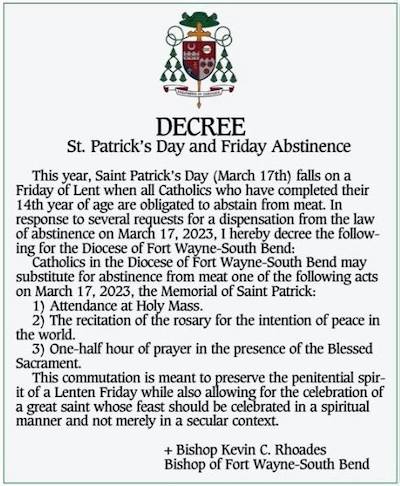
And, since the feast usually takes place during Lent, the announcement above shows that some of us can indulge a wee bit more than others.

+    +    +

Growing up in a postwar Catholic environment, those of us who attended the parish schools in the United States, were taught that there were two kinds of people; those who were Irish, and those who wish they were. My own family appeared to fall into neither category. There were the Irish nuns who favored the Irish kids, including the unforgettable Sister Mary Mel (yes, her real name), who wasn't above calling some miscreant a "jackass." But at least she was colorful. The rest of all things that were allegedly Irish were just so much blarney. I came to dismiss the whole notion of St Paddy's Day -- indeed, the whole notion of being Irish -- as a license for certain people to be more arrogant and obnoxious than they already were.

"Hail glorious Saint Patrick dear saint of our isle
On us thy poor children look down with a smile —"
But I'm not singing hymns and I'm not saying prayers
No, I'm gritting my teeth as I walk down the stairs
And into the street with these louts fiercely drinking
And screeching and lurching, and here's what I'm thinking —
They're using a stereotype, a narrow example,
A fraction, not even a marketing sample
To imitate Ireland, from which they don't come!
So unless that's just stupid, unless it's plain dumb,
All these kids from New Jersey and the five boroughs
And hundreds of cities, all drowning their sorrows,
With bottles and glasses and heads getting broken
(Believe me, just ask the mayor of Hoboken)
All that mindlessness, shouting and getting plain stocious —
That isn't Irish, that's simply atrocious.
I've another word too for it, this one's more stinging
I call it "racism." See, just 'cause you're singing
Some drunken old ballad on Saint Patrick's Day
Does that make you Irish? Oh, no — no way.
Nor does a tee-shirt that asks you to kiss them —
If they never come back I surely won't miss them
Or their beer cans and badges and wild maudlin bawling
And hammered and out of it, bodies all sprawling.

They're not of Joyce or of Yeats, Wilde, or Shaw.
How many Nobel Laureates does Dublin have? Four!
Think of this as you wince through Saint Patrick's guano —
Not every Italian is Tony Soprano.

Eventually I went to college, where I discovered Irish music. I mean the real thing, not the over-romanticized "Christmas-in-Killarney-on-St-Patrick's-in-June" that passed itself off as genuine the whole time. I simply couldn't get enough of it. I used to watch the Saint Patrick's Day parade in Cincinnati, which included the carrying of the statue of the Saint, which the local chapter of the Ancient Order of Hibernians would "steal" in the middle of night, from what was once the German parish in Mount Adams. (Long story.) There was also the local Irish dance school, with boys and girls who never imagined that, three decades later, they could do it for fame and fortune in shows like "Riverdance."

Who knew?

By the end of the 1970s I spent Sunday evenings working at a coffeehouse, and I helped broker a deal that brought Clannad to Cincinnati on their first American tour. I even gave harpist/vocalist Máire Brennan (pronounced MOY-uh) a ride back to where she was staying. Otherwise shy and aloof, I got her to laugh at my jokes. That seemed to matter at the time.

I saw Máire again in 1987, in a music video on VH1, for a song entitled "Something to Believe In." She was also the haunting voice in the Volkswagen commercials. Naturally she's world-famous now, and probably wouldn't return my calls, although she did write me a long and possibly heartfelt note when she autographed my copy of their album. I say "possibly" because it was in Gaelic, so I'll never know for sure, especially since it was among my collection that was stolen from my apartment in Georgetown back in 1994. (Bob, if you're reading this, tell your rich white trash buddies that I'd really like to have it back. And before you get your boxers in a bunch, the neighbors all thought YOU did it!) Máire also came out with a book in 2001 entitled "The Other Side of the Rainbow." She continues to tour and so on, but I knew her when.

(Sigh ...) Anyway, back to the '70s. While the whole world (including my now-beloved Celia on the other side of it) was going bananas over disco, the feast became an annual ritual, of spending most of the accompanying weekend hanging out at Hap's Irish Pub in the Hyde Park section of Cincinnati, or at Arnold's Bar and Grill downtown. Even when I moved to Washington in 1980, I learned Irish dancing (if not quite what appears in the above video), Irish folk tales, and the like. But the upscale bars in the Nation's capital weren't as quaint as the neighborhood pubs in my old hometown. I was under no illusions that this heritage was one that I could claim for my own.

In 1982, that claim became even more elusive. I married a girl whose grandparents came over from Slovakia, and who grew up hearing Slovak around the house. This pretty much killed any enthusiasm for all things Irish around our house.

You see, I learned a piece of American Catholic history that the mostly Irish-American church historians didn't exactly wear on their sleeves. By the time eastern Europeans came to America in the late 19th and early 20th century, the Irish were already the big fish in the little blue-collar pond, and didn't mind letting the "Hunkies" in the coal towns and factory neighborhoods know it. Going up the food chain, it got worse. Catholics of Eastern Rites -- with customs and liturgy similar to the Orthodox, but in communion with Rome -- had married priests. The mostly-Irish bishops assumed they were either schismatics, or worse. Their wives couldn't be treated in Catholic hospitals, and their children were barred from Catholic schools. Confused as these bishops were, they concluded that the faithful would be even more confused by the presence of married Catholic priests. Thus, by the 1920s, The (Irish-)American bishops pressured Rome to bar the (legitimately) married priests from coming to America, let alone ministering.

It has been shown that most of the growth of Eastern Orthodoxy in North America can be attributed to the damned ignorance of the (Irish-)American bishops of the time. (Hey, guys, nice work!)

This latency towards all things Irish got a reprieve when the marriage tanked in 1990. Then one night -- it was about 1998, as I remember -- I was interviewed for a writing job by a priest who edited a major Catholic periodical. A native of Dublin, he reminded me of what really mattered:

“Patrick was not Irish, and on his Feast Day, we do not celebrate being Irish; we celebrate being Catholic.”

I knew that the Alexanders came from a small town near Verdun, in the Lorraine province of northeastern France. But in recent years we learned that, before the 18th century, the Alexandre line was expatriated from Scotland, a result of the Rebellion when England overtook them. I was also to learn that the man known by the Roman name of Maganus Sucatus (Maewyn Succat in Gaelic) was of a Roman family, born in Kilpatrick, near Dumbarton, in that part of Great Britain that is now Scotland. Sooooo ... if not being Irish were not enough, Patricius (in modern English, Patrick) -- as he was known in later years, being of the Roman "patrician" class, and a "patriarch" to his spiritual charges -- might just as easily be claimed by the Scots as one of their own.
For years, one highlight of the day would be the Annual Irish Poetry Reading. That was when I'd call my folks in Ohio on this day every year, and with their speakerphone on, recite the following piece by Benjamin Hapgood Burt in a very bad Irish brogue:

One evening in October, when I was one-third sober,
    An' taking home a "load" with manly pride;
My poor feet began to stutter, so I lay down in the gutter,
    And a pig came up an' lay down by my side;
Then we sang "It's all fair weather when good fellows get together,"
    Till a lady passing by was heard to say:
"You can tell a man who 'boozes' by the company he chooses"
    And the pig got up and slowly walked away.


Since then, both have entered into eternity, most likely with better things to do.

Today, those who are Irish, who wish they were, or who don't give a rat's arse either way, will dine on Irish lamb stew. When I can ever find it amidst my stuff, I use this occasion to wear a button with the words of William Butler Yeats: “I will arise and go now, and go to Innisfree.” Usually, I listen to Celtic music the entire day, and at an opportune time and place, I dine on corned beef and cabbage. This is admittedly an American innovation for the Irish, as poor immigrants from the "auld sod" found corned beef (a substitute used by their Jewish neighbors in place of bacon) to be much cheaper than lamb.

Beginning this year, I got lucky, because right down the street from me, they opened an Irish pub. It seems that three Thai restaurant within a half mile of each other was one too many, and the one closest to me was replaced with the watering hole of my dreams. The Celtic House is situated on the corner of Columbia Pike and South Barton Street, right at the end of the latter street, which would be my street, a mere ten-minute walk away. Sometime today I'm making a point of being there, as if my fond memories of discovering real Irish culture have come full circle. True, it's not as small and crowded as Hap's, not nearly as weather-beaten as Arnold's, and they won't be selling raffle tickets for NORAID under the table, but I can ignore that long enough to enjoy a lamb stew.

I'll also probably watch Mel Gibson in Braveheart later tonight, while enjoying a Guiness float (which is like a root beer float, only ... well, you know). Who cares if William Wallace was Scottish? No one cares if Patrick isn't Irish, do they? After all, "The Apostle of Ireland" is properly claimed by Catholics everywhere, whether a bunch of micks care to admit it or not.

“Agus fagaimid siud mar ata se.”

Wednesday, March 17, 2021

My Annual Über-Celtic Moment

Today the Church celebrates the feast of Saint Patrick (387-493), the patron saint of Ireland. It is on the Emerald Isle that today is both a national and religious holiday. At one time, the bars would close and the churches would be full out of obligation. Only in recent years has the feast seen a more rebellious spirit, complete with parades and green beer (not to mention green hair). Naturally (if ironically), they have the Americans to thank for this.

Growing up in a postwar Catholic environment, those of us who attended the parish schools in the United States, were taught that there were two kinds of people; those who were Irish, and those who wish they were. My own family appeared to fall into neither category. There were the Irish nuns who favored the Irish kids, including the unforgettable Sister Mary Mel (yes, her real name), who wasn't above calling some miscreant a "jackass." But at least she was colorful. The rest of all things that were allegedly Irish were just so much blarney. I came to dismiss the whole notion of St Paddy's Day -- indeed, the whole notion of being Irish -- as a license for certain people to be more arrogant and obnoxious than they already were.

"Hail glorious Saint Patrick dear saint of our isle
On us thy poor children look down with a smile —"
But I'm not singing hymns and I'm not saying prayers
No, I'm gritting my teeth as I walk down the stairs
And into the street with these louts fiercely drinking
And screeching and lurching, and here's what I'm thinking —
They're using a stereotype, a narrow example,
A fraction, not even a marketing sample
To imitate Ireland, from which they don't come!
So unless that's just stupid, unless it's plain dumb,
All these kids from New Jersey and the five boroughs
And hundreds of cities, all drowning their sorrows,
With bottles and glasses and heads getting broken
(Believe me, just ask the mayor of Hoboken)
All that mindlessness, shouting and getting plain stocious —
That isn't Irish, that's simply atrocious.
I've another word too for it, this one's more stinging
I call it "racism." See, just 'cause you're singing
Some drunken old ballad on Saint Patrick's Day
Does that make you Irish? Oh, no — no way.
Nor does a tee-shirt that asks you to kiss them —
If they never come back I surely won't miss them
Or their beer cans and badges and wild maudlin bawling
And hammered and out of it, bodies all sprawling.

They're not of Joyce or of Yeats, Wilde, or Shaw.
How many Nobel Laureates does Dublin have? Four!
Think of this as you wince through Saint Patrick's guano —
Not every Italian is Tony Soprano.

Eventually I went to college, where I discovered Irish music. I mean the real thing, not the over-romanticized "Christmas-in-Killarney-on-St-Patrick's-in-June" that passed itself off as genuine the whole time. I simply couldn't get enough of it. I used to watch the Saint Patrick's Day parade in Cincinnati, which included the carrying of the statue of the Saint, which the local chapter of the Ancient Order of Hibernians would "steal" in the middle of night, from what was once the German parish in Mount Adams. (Long story.) There was also the local Irish dance school, with boys and girls who never imagined that, three decades later, they could do it for fame and fortune in shows like "Riverdance."

Who knew?

By the end of the 1970s I spent Sunday evenings working at a coffeehouse, and I helped broker a deal that brought Clannad to Cincinnati on their first American tour. I even gave harpist/vocalist Máire Brennan (pronounced MOY-uh) a ride back to where she was staying. Otherwise shy and aloof, I got her to laugh at my jokes. That seemed to matter at the time.

I saw Máire again in 1987, in a music video on VH1, for a song entitled "Something to Believe In." She was also the haunting voice in the Volkswagen commercials. Naturally she's world-famous now, and probably wouldn't return my calls, although she did write me a long and possibly heartfelt note when she autographed my copy of their album. I say "possibly" because it was in Gaelic, so I'll never know for sure, especially since it was among my collection that was stolen from my apartment in Georgetown back in 1994. (Bob, if you're reading this, tell your rich white trash buddies that I'd really like to have it back. And before you get your boxers in a bunch, the neighbors all thought YOU did it!) Máire also came out with a book in 2001 entitled "The Other Side of the Rainbow." She continues to tour and so on, but I knew her when.

(Sigh ...) Anyway, back to the '70s. While the whole world (including my now-beloved Celia on the other side of it) was going bananas over disco, the feast became an annual ritual, of spending most of the accompanying weekend hanging out at Hap's Irish Pub in the Hyde Park section of Cincinnati, or at Arnold's Bar and Grill downtown. Even when I moved to Washington in 1980, I learned Irish dancing (if not quite what appears in the above video), Irish folk tales, and the like. But the upscale bars in the Nation's capital weren't as quaint as the neighborhood pubs in my old hometown. I was under no illusions that this heritage was one that I could claim for my own.

In 1982, that claim became even more elusive. I married a girl whose grandparents came over from Slovakia, and who grew up hearing Slovak around the house. This pretty much killed any enthusiasm for all things Irish around our house.

You see, I learned a piece of American Catholic history that the mostly Irish-American church historians didn't exactly wear on their sleeves. By the time eastern Europeans came to America in the late 19th and early 20th century, the Irish were already the big fish in the little blue-collar pond, and didn't mind letting the "Hunkies" in the coal towns and factory neighborhoods know it. Going up the food chain, it got worse. Catholics of Eastern Rites -- with customs and liturgy similar to the Orthodox, but in communion with Rome -- had married priests. The mostly-Irish bishops assumed they were either schismatics, or worse. Their wives couldn't be treated in Catholic hospitals, and their children were barred from Catholic schools. Confused as these bishops were, they concluded that the faithful would be even more confused by the presence of married Catholic priests. Thus, by the 1920s, The (Irish-)American bishops pressured Rome to bar the (legitimately) married priests from coming to America, let alone ministering.

It has been shown that most of the growth of Eastern Orthodoxy in North America can be attributed to the damned ignorance of the (Irish-)American bishops of the time. (Hey, guys, nice work!)

This latency towards all things Irish got a reprieve when the marriage tanked in 1990. Then one night -- it was about 1998, as I remember -- I was interviewed for a writing job by a priest who edited a major Catholic periodical. A native of Dublin, he reminded me of what really mattered:

“Patrick was not Irish, and on his Feast Day, we do not celebrate being Irish; we celebrate being Catholic.”

I knew that the Alexanders came from a small town near Verdun, in the Lorraine province of northeastern France. But in recent years we learned that, before the 18th century, the Alexandre line was expatriated from Scotland, a result of the Rebellion when England overtook them. I was also to learn that the man known by the Roman name of Maganus Sucatus (Maewyn Succat in Gaelic) was of a Roman family, born in Kilpatrick, near Dumbarton, in that part of Great Britain that is now Scotland. Sooooo ... if not being Irish were not enough, Patricius (in modern English, Patrick) -- as he was known in later years, being of the Roman "patrician" class, and a "patriarch" to his spiritual charges -- might just as easily be claimed by the Scots as one of their own.
For years, one highlight of the day would be the Annual Irish Poetry Reading. That was when I'd call my folks in Ohio on this day every year, and with their speakerphone on, recite the following piece by Benjamin Hapgood Burt in a very bad Irish brogue:

One evening in October, when I was one-third sober,
    An' taking home a "load" with manly pride;
My poor feet began to stutter, so I lay down in the gutter,
    And a pig came up an' lay down by my side;
Then we sang "It's all fair weather when good fellows get together,"
    Till a lady passing by was heard to say:
"You can tell a man who 'boozes' by the company he chooses"
    And the pig got up and slowly walked away.


Since then, both have entered into eternity, most likely with better things to do.

Today, those who are Irish, who wish they were, or who don't give a rat's arse either way, will dine on Irish lamb stew. When I can ever find it amidst my stuff, I use this occasion to wear a button with the words of William Butler Yeats: “I will arise and go now, and go to Innisfree.” Usually, I listen to Celtic music the entire day, and at an opportune time and place, I dine on corned beef and cabbage. This is admittedly an American innovation for the Irish, as poor immigrants from the "auld sod" found corned beef (a substitute used by their Jewish neighbors in place of bacon) to be much cheaper than lamb.

Beginning this year, I got lucky, because right down the street from me, they opened an Irish pub. It seems that three Thai restaurant within a half mile of each other was one too many, and the one closest to me was replaced with the watering hole of my dreams. The Celtic House is situated on the corner of Columbia Pike and South Barton Street, right at the end of the latter street, which would be my street, a mere ten-minute walk away. Sometime today I'm making a point of being there, as if my fond memories of discovering real Irish culture have come full circle. True, it's not as small and crowded as Hap's, not nearly as weather-beaten as Arnold's, and they won't be selling raffle tickets for NORAID under the table, but I can ignore that long enough to enjoy a lamb stew.

I'll also probably watch Mel Gibson in Braveheart later tonight, while enjoying a Guiness float (which is like a root beer float, only ... well, you know). Who cares if William Wallace was Scottish? No one cares if Patrick isn't Irish, do they? After all, "The Apostle of Ireland" is properly claimed by Catholics everywhere, whether a bun ch of micks care to admit it or not.

“Agus fagaimid siud mar ata se.”
Tuesday, December 15, 2020

My Year of Living Dangerously

The year of Our Lord nineteen hundred and eighty (1980) may be remembered as the most critical in my life. I made decisions that would, more than any other, determine its direction forever, and so I choose this occasion to elaborate.

My So-Called Life

In the summer of 1978, I graduated from the University of Cincinnati, with a Bachelor of Science Degree in Graphic Design. Being raised in a "Procter and Gamble family," it only seemed to make sense that I would seek out a company, large or small, to hire me for life. That didn't quite happen. Early in my interviews, I was asked to work for a small advertising agency -- as a free-lancer. The thought of going into business for myself had not occurred to me until the moment they asked. I said yes, and for two and a half years, it made all the difference.

My academic training was excellent. Unfortunately, the ability of my instructors to transfer such knowledge to real life left something to be desired. This was despite an internship program that essentially allowed me to graduate with eighteen months of real job experience. But there I was, working in Cincinnati by day, and living with my parents in the eastern outskirts of the city at night. There wasn't much promise there for a young designer in the late 1970s. "Mother Procter" was queen of the industry, and set the pace not only for the big agencies and creative houses, but for the bottom-feeders consisting of cigar-chomping geezers whose creative acumen was reduced to cranking out one piece of overdecorated future landfill after another. They'd look at my work. "Very nice, but can you spec type?" I'd go to agencies for ad work. "This stuff is too creative. Have you tried looking for studio work?" Then I'd interview at studios. "Most of this stuff is straight advertising. Have you gone to the agencies?" Most guys were amicable, some were very instructive, a few were simply jerks with bad polyester suits and even worse comb-overs. Most of them were not as aware of the industry's big picture as they thought they were.

That big picture wasn't looking too good in the late 1970s. The recession of the last "hope and change" guy, Jimmy Carter, was wreaking havoc. They left behind the riff-raff that constituted my interviews, contrasted with the occasional pompadours with Italian suits and the usual pretensions, who thought they were doing a podunk town like Cincinnati a favor by hanging their shingle there. Between clowns to the left of me, and posers to the right, I was stuck in the middle with no place to go. A few of my colleagues were disgusted with the local scene at the offset, and headed to New York or Chicago.

I couldn't blame them. Cincinnati was home to a number of two-year trade schools devoted to "commercial art" or related fields. Without the burden of academic and liberal arts requirements, these storefront diploma mills pumped out graduates equipped to do the low-end production work, without pushing the envelope in terms of design. "Scaling new heights of mediocrity" was what one art director called it. Their work didn't break new ground, but it was the bread and butter work for smaller and less aggressive markets like ours. A portfolio of purely creative innovation might wow them in the Big Apple, but it didn't cut much ice in the Queen City.

And yet, provincial though it was, Cincinnati was about as "big city" as I could handle, or so I thought.

Mama's Boy Is In The House

Early that year, I hooked up with a commercial studio run by one of the city's most respected illustrators. A former agency director of a firm eventually bought out by Young and Rubicam, he later presided over a family affair. His wife kept the books, his older son used the studio as his apartment (the cause of occasional awkward moments when female visitors spent the night there), and his younger son came in around mid-afternoon. Waiting for Junior was work that I could have been doing, as opposed to sitting around half the time. I was paid by the hour.

The rest of my life wasn't setting the world on fire either. Looking back, it was easy to see why. I was twenty-five and still living with my parents. The older of my two sisters had already married and had a son. My younger brother left home during sophomore year of college, and wasn't coming back. I was also dating this girl whose horizons were even shorter than mine. I'm not sure how we ever connected, really, unless you count either boredom or low expectations as an excuse. Not only that, but in addition to three months of dating her, it took me two months to dump her. After all, I was her ticket out of living with her parents. This mistake alone was reason enough to get outa Dodge City.

As dismal as things seemed, my life outside the office was coming on its own. Cincinnati was home to an emerging roots music scene. I was becoming known as a musician, organizer, somebody who was good to have around to get events going. The bluegrass people, the Celtic people, the contra dance and international folk dance crowds, they all knew me.

But when you added it all up, I seemed to be at a standstill.

Back in February, my professor who headed my department back at UC convinced me to send a slide portfolio of my work to something the Government called "The Federal Design Registry." I had just started working for the Mom-and-Pop studio, but I figured, what could it hurt?

The Other Shoe

Then in September, three things happened within about a week that heralded an impending change of life. First, a cousin of mine suffering from severe depression hung himself on the tree in his yard. Second, I finally got rid of the crazy girlfriend. But the third thing was what did it. A few weeks after the boss said I was doing a great job, his younger son graduated from the rinky-dink trade school, and the place wasn't big enough for both of us. Cincinnati is a small town when it comes to who's doing well or not-so-well. The Big Guy couldn't afford the bad rep to hit the streets, so he told me he was cutting me loose because I was doing a NOT-so-great job. His son's predicament was a mere coincidence. Lying through his teeth wasn't anything personal; it was business.

The worst thing was that the old-timers I knew and spoke to saw nothing unusual in this. I began to lose some respect for my chosen profession. I had heard of guys being "black-balled" so some studio hack could save face, but never thought of myself as much of a threat.

I free-lanced for a couple of months, but hardly enough to live on. Then I got a letter from Washington, an "inquiry of availability," they called it. I had just landed a contract with Procter and Gamble, the kind of work that the aforementioned bottom-feeders (including the one I had just left) would have killed for. In the three or four weeks I was there, I had a blast. The prospect of following my father's footsteps -- well, sort of -- was a great rush. I was sorry I hadn't gotten in there sooner. But however long they would have kept me under contract, it wasn't a sure thing.

Meanwhile, I was being interviewed on the phone, by an art director who was well respected in Washington. He worked for some agency whose name I had never heard. He was impressed with my work, and after listening to his own resume, that was good enough for me -- to tell him I'd think about it over the weekend.

The Epiphany

You know those times when, out of the blue, you suddenly realize your destiny has been hitting you in the backside? I'm not sure how it happened, only that it did. No, I take that back; I'm sure. A few years earlier, I had my palm read. It was just for fun, mind you, at a time when kids try just about anything once. When I remembered the "prophecy" that I would, in a quest for inner peace, move to a city near a large body of water, and meet a man who would change my entire life, it all started to make sense.

Pretty lame pretense for a life-altering decision, but let's face it, it didn't take much.

Mom didn't take it well at all. How would I ever survive without screwing things up royally? This was the conventional wisdom in our house, one that didn't always apply to my younger siblings. I answered it with a question: what the hell else was I going to do? That crazy ex-girlfriend had just visited me, and she wanted me back. Fortunately, I had the perfect excuse. In a sense, she represented everything I had to escape -- a life spent "scaling new heights of mediocrity."

My folks had already suggested I take a job at the post office, and do design work on the side. Had I followed that advice, I'd be a postal worker today. So much for five years of college.

It all added up. Either I get the hell out now, or spend the rest of my life wishing I had.

So, on Thursday, the 11th of December, I loaded everything I could fit into a newly-purchased 1980 Honda Civic, and headed up Interstate 71, toward the rest of my life in what was politely known as "the Nation's capital." That life as a Federal Employee began on the 15th of December. Forty years ago, and everything that has happened since -- the good, the bad, the ugly -- can be traced to that one decision.

Afterwords

How has it changed me? In some ways more than others.

Back home I'm still known as "Dave." Here in DC, even my closest friends know me as "David." It took me at least twenty years just to feel at home here in the so-called "Nation's capital." I managed to lose some speech patterns, though. I pronounce "neither" as "NYE-thur" instead of "NEE-thur." Same goes for "either." When someone says something I didn't hear, I say "come again?" instead of "please?" (because the Germans who settled around that part of Ohio would say "Bitte?" in the same situation). Then again, the gals my uncles married are still called my "ants" instead of my "ahhnts." I could probably go back to Ohio right now and fit right in. I have yet to decide if I want to. The musings of Tom Wolfe notwithstanding, you really CAN go back home again. Just don't expect things to stay where they were when you left.

Although I still refer to women as "gals."

(FIRST IMAGE: The author, in a May 1978 publicity photo, with his late-1960s vintage Gibson J-160E.)