Showing posts with label rites of passage. Show all posts

Friday, December 06, 2024

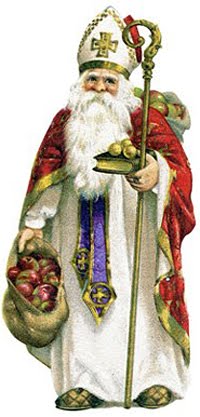
Father Nicholas: The REAL Santa Claus

When I was young and growing up in Ohio, some of my classmates would leave their shoes outside the bedroom door on the night of the fifth of December, so that Saint Nicholas would leave them treats for the next morning.

We never did that at our house, but I did ask Mom how it was that Saint Nicholas got to be called "Santa Claus." By this time I had already determined a connection between the two. But while my mother was salutatorian of her high school class -- one of a grand total of fifteen students, but I digress -- she was not one to wear her erudition on her sleeve. So, rather than go into an entymological treatise on the subject, she simply told me: “Say ‘Saint Nicholas’ three times real fast.”

That carried me over for at least a few years.

No good Catholic home is without an answer to the question of whether there is such a thing as Santa Claus. There is, but we are accustomed to the corruption of his real name, one that developed over the centuries. By the time devotion to Saint Nicholas reached Europe, he was known by different names. In the British Isles, he was "Father Christmas." In the Netherlands, he was "Sinterklaas." By the 19th century, periodicals such as Harper's Bazaar, and promoters of a fountain beverage known as Coca-Cola, had not only transformed the name, but the bright red costume with the white-fur trim, both of which we recognize today.

Whatever people call him, or however they depict him, the Bishop of Myra in the fourth century is a real person, and he presently dwells in Heaven with the Communion of Saints. Our Mother the Church celebrates his feast on the sixth of December, in both the East and the West.

VIDEO: A variation on a theme.

Nicholas was no lightweight. He was in attendance at the Council of Nicaea in the year 325, when the Arian heresy was being debated. At one point, he became so enraged with the Bishop Arius (whose errors were supported by the majority of bishops up to that time, remember?), that he supposedly punched Arius in the nose.

That's right, kids, Jolly Olde Saint Nick cold-cocked a heretic! (Some accounts say that he merely slapped Aruis, but that's so pantywaist, who'd believe it?)

Anyway, many of the bishops there, including the Emperor Constantine, were outraged by the assault, and given their sympathies, had Nicholas thrown in the dungeon. That night, the Emperor had a dream where Nicholas appeared to him, adorned in his finest liturgical vesture, and holding the Book of the Gospels. Awakened with a fright, the Emperor summoned his guards, who joined him as he raced to the dungeon, to find Nicholas unchained, adorned in ... you guessed it.

The story varies in certain details. Some accounts tell of Our Lord and Our Lady appearing to Nicholas in the dungeon. I heard the one above from an "Old Calendar" Russian Orthodox priest. It is also said that Nicholas, being restored to his rightful place in the council, slept through the rest of the proceedings.

I can't say I blame him.

Michael Foley provides more details about the life and legacy of Nicholas.

+    +    +

At the little Greek Catholic parish where my son learned the Faith, as it had been taught to his mother, the Feast of Saint Nicholas is a particular cause for celebration. He is the patron of Greek Catholics, and his image graces the iconostasis on the far left side as viewed from the assembly. There is a special hymn dedicated to him ...

O kto kto, Nikolaja l'ubit,
O kto kto, Nikolaju sluzit.
    Tomu svjatyj Nikolaj,
    Na vsjakij cas pomahaj.
    Nikolaj, Nikolaj!

O who loves Nicholas the Saintly,
O who loves Nicholas the Saintly.
    Him will Nicholas receive,
    and give help in time of need.
    Nicholas, Nicholas!

... and the children in the School of Religion program do a pageant in his honor every Sunday closest to the sixth of December. It culminates in the arrival of an elderly man with a long white beard, dressed in the robes of a Greek Catholic bishop, with whom the children meet in much the same manner as they would his commercialized (and most inauthentic) counterpart.

Paul used to get special icon cookies to take home, much like the ones that appear in the photos, emblazoned with the words "O Holy Nicholas" in Slavonic. These unique gingerbread cookies are from a recipe which appears at the stnicholascenter.org website.

I dearly miss that little parish. It has changed over the last four decades. In 2012, they completed a new and larger house of worship, one that emulates the style common to Eastern Europe. But with every successful building project they have -- the parish hall, the rectory -- the place seems a little less homey, a little larger than life. Still, the spirit of Saint Nicholas reminds them every year, of the things that are passed on, and that remain the same.

And for those parishes of the Roman Rite, whose priests would hold off any celebration of Christmas until the day itself, and the days thereafter when everyone is out of town, they too might have at least one reason to reconsider, as Advent is not only a season of penitence, but of expectation. (This venue will provide other reasons soon, so stay tuned.)

And on that note, let's go bake some cookies already!
 

Wednesday, December 06, 2023

Father Nicholas: The REAL Santa Claus

When I was young and growing up in Ohio, some of my classmates would leave their shoes outside the bedroom door on the night of the fifth of December, so that Saint Nicholas would leave them treats for the next morning.

We never did that at our house, but I did ask Mom how it was that Saint Nicholas got to be called "Santa Claus." By this time I had already determined a connection between the two. But while my mother was salutatorian of her high school class -- there were only about a dozen students in her class, but I digress -- she was not one to wear her erudition on her sleeve. So, rather than go into an entymological treatise on the subject, she simply told me: “Say ‘Saint Nicholas’ three times real fast.”

That carried me over for at least a few years.

No good Catholic home is without an answer to the question of whether there is such a thing as Santa Claus. There is, but we are accustomed to the corruption of his real name, one that developed over the centuries. By the time devotion to Saint Nicholas reached Europe, he was known by different names. In the British Isles, he was "Father Christmas." In the Netherlands, he was "Sinterklaas." By the 19th century, periodicals such as Harper's Bazaar, and promoters of a fountain beverage known as Coca-Cola, had not only transformed the name, but the bright red costume with the white-fur trim, both of which we recognize today.

Whatever people call him, or however they depict him, the Bishop of Myra in the fourth century is a real person, and he presently dwells in Heaven with the Communion of Saints. Our Mother the Church celebrates his feast on the sixth of December, in both the East and the West.

VIDEO: A variation on a theme.

Nicholas was no lightweight. He was in attendance at the Council of Nicaea in the year 325, when the Arian heresy was being debated. At one point, he became so enraged with the Bishop Arius (whose errors were supported by the majority of bishops up to that time, remember?), that he supposedly punched Arius in the nose.

That's right, kids, Jolly Olde Saint Nick cold-cocked a heretic! (Some accounts say that he merely slapped Aruis, but that's so pantywaist, who'd believe it?)

Anyway, many of the bishops there, including the Emperor Constantine, were outraged by the assault, and given their sympathies, had Nicholas thrown in the dungeon. That night, the Emperor had a dream where Nicholas appeared to him, adorned in his finest liturgical vesture, and holding the Book of the Gospels. Awakened with a fright, the Emperor summoned his guards, who joined him as he raced to the dungeon, to find Nicholas unchained, adorned in ... you guessed it.

The story varies in certain details. Some accounts tell of Our Lord and Our Lady appearing to Nicholas in the dungeon. I heard the one above from an "Old Calendar" Russian Orthodox priest. It is also said that Nicholas, being restored to his rightful place in the council, slept through the rest of the proceedings.

I can't say I blame him.

Michael Foley provides more details about the life and legacy of Nicholas.

+    +    +

At the little Greek Catholic parish where my son learned the Faith, as it had been taught to his mother, the Feast of Saint Nicholas is a particular cause for celebration. He is the patron of Greek Catholics, and his image graces the iconostasis on the far left side as viewed from the assembly. There is a special hymn dedicated to him ...

O kto kto, Nikolaja l'ubit,
O kto kto, Nikolaju sluzit.
    Tomu svjatyj Nikolaj,
    Na vsjakij cas pomahaj.
    Nikolaj, Nikolaj!

O who loves Nicholas the Saintly,
O who loves Nicholas the Saintly.
    Him will Nicholas receive,
    and give help in time of need.
    Nicholas, Nicholas!

... and the children in the School of Religion program do a pageant in his honor every Sunday closest to the sixth of December. It culminates in the arrival of an elderly man with a long white beard, dressed in the robes of a Greek Catholic bishop, with whom the children meet in much the same manner as they would his commercialized (and most inauthentic) counterpart.

Paul used to get special icon cookies to take home, much like the ones that appear in the photos, emblazoned with the words "O Holy Nicholas" in Slavonic. These unique gingerbread cookies are from a recipe which appears at the stnicholascenter.org website.

I dearly miss that little parish. It has changed over the last four decades. More than ten years ago, they completed a new and larger house of worship, one that emulates the style common to Eastern Europe. But with every successful building project they have -- the parish hall, the rectory -- the place seems a little less homey, a little larger than life. Still, the spirit of Saint Nicholas reminds them every year, of the things that are passed on, and that remain the same.

And for those parishes of the Roman Rite, whose priests would hold off any celebration of Christmas until the day itself, and the days thereafter when everyone is out of town, they too might have at least one reason to reconsider, as Advent is not only a season of penitence, but of expectation. (This venue will provide other reasons soon, so stay tuned.)

And on that note, let's go bake some cookies already!
 

Friday, May 19, 2023

The Next Day of the Rest of My Life

“Today is the first day of the rest of your life.”

IMAGE: A map of Kings Island Amusement Park, as it appeared in 1973.

Mine was fifty years ago last Friday. We looked into that last week. The next one was fifty years ago today.

+ + +

The picnic grounds that later became known as an amusement park occupied a place east of Cincinnati. First known in 1867 as "Ohio Grove, the Coney Island of the West," it was later known as "Coney Island on the Ohio," and eventually just "Coney Island." Between periodic floods in the spring, and having extended the limits of its property, the Taft Broadcasting Company, which acquired the park by the late 1960s saw the need to expand the concept elsewhere. They found a plot 25 miles northeast of the city, near a little town known as Kings Mills. This explains the otherwise-inexplicable name of “Kings Island” for a theme park. Forty years ago today, I neared the end of one adventure, and began another, one that was to change my outlook on life, and on my self-image.

I had worked at the park briefly the previous autumn -- the "post-season" weekends, as they're called -- in the Rides department. I told them I had experience with canoeing, so they put me at a lake helping people get into and out of canoes. When the weather got too cold, they transferred me to the roller coaster. At the end of October, that was the end of that.

But I wanted more. They had a "Live Shows and Entertainment" department. The money was better, and one of my buds from high school, Chris "Seadog" Seipelt, was one of the animal characters. You know, those guys who walk around in the animal costumes and get their pictures taken with little kids and all that. "You should try out, Dave," he told me. "I'll even help you prepare the audition." He had this costume head which I wore as a prop, and with a 45rpm recording of Elvis Presley's "Blue Suede Shoes," I passed the audition with a presentation of "Bingo Learns to Dance." (Don't ask.)

And I was in.

The money was certainly better. And being in the Shows department had a certain caché that wasn't shared by, say, the ride operators or those who worked the food concession stands. Wearing jumpsuits for most of the day, the guys in our crew would go out for a half-hour or forty-five minutes in these costumes based on Hanna-Barbera cartoon characters -- Yogi Bear, the Flintstones, you know the type -- escorted by these girls known as "guardettes," who would do the talking (since we weren't allowed) and help arrange the kids for photographs. We also had a performance in "Hanna-Barbera Land" of "The Banana Splits Show," which was a fictional rock band composed of four animal characters, and a popular Saturday morning kids show at the time. We pantomimed to a pre-recording of the characters in action. Even as a rookie, I became renowned for my rendition of "Fleagle," the de facto leader of the pack.

It was hot. It was grueling. It was three or four times a day. It was worth every minute.

But the character for which I became best known, was "Templeton the Rat," from the Hanna-Barbera production of "Charlotte's Web." I actually learned how to make the character appear quite real. Once inside the costume, I would bend over slightly, with my head down, and bow my legs when I walked. That made the torso jiggle back and forth, and people actually could imagine seeing a live rodent trying to walk on his hind legs. I can still remember the uproarious laughter from the crowds as I walked away.

IMAGE: The Banana Splits, in an undated publicity photo.

I modeled for children's fashion magazines, and promotions for consumer products. But for all that, my greatest single achievement was being in a movie. After building Kings Island, Taft Broadcasting decided to build a sister park north of Richmond known as "Kings Dominion." They produced a fifteen-minute preview film to promote it in the Richmond area. Some footage was shot at Kings Island, after which the new park would be modeled, while other footage was shot at the construction site. The Banana Splits were the main cast, and I was "Snorky" the elephant, and the only rookie in the cast. We drove to Richmond to film some of it, and Dudley Taft (a descendant of President William Howard Taft) flew us home in his private jet.

Now, back to the ladies.

These girls who accompanied us came from the Guest Relations department, and were hired for their poise, composure, and -- oh yes, their bodaciousness. In fact, they were just about the hottest babes in the whole park. Not only that, but they were the nicest girls you could ever wanna take home to Mama. Most of the guys in the crew were working their way through college, and a few were pretty sure of themselves, especially when it came to the ladies, these ladies in particular. They struck out more often than not, at least at first, which surprised me at the time. After all, high school was nothing like this. I mean, there were rules, you see. You dated within your predestined social class, and never ventured outside of it. There was this one guy -- Tom, I think his name was -- and he told us that he could use every cliché he could think of and still win over the object of his affection. And it actually worked.

There were plenty of opportunities for Tom, of course, and anyone else so bold. We were young, it was summer, and after working hard, we would play hard. There were parties two or three nights a week, just the Characters and the Guardettes. Unlike them, I was not so bold. And one of the first things I learned, is that the girls liked me best for that reason, that I wasn't constantly on the make, which is why they named me "Character of the Year" in an informal poll. Even so, I dated quite a bit that summer, but I usually went for the younger ones, figuring that was all I could, uh, handle. The guys would get on my case for chasing "jailbait," a term someone actually had to explain more than once. I had no idea what they were talking about. I was far from losing my innocence that summer.

But it didn't matter. You see, I could still remember getting beat up by the kids in the neighborhood only ten years earlier. I was physically bullied all through high school. But that summer, for the first time in my nearly nineteen years of a so-called life, I knew what it was like to be ... popular.

IMAGE: George Clooney, yeah, that George Clooney. I knew his dad, sort of.

One week, "The Nick Clooney Show" was broadcast from the park. That was a local variety and talk show back in the 1970s. My buddy Terry and I actually met Nick after work. He was walking around in the park, and against my protestations, Terry called out, "Hey, Nick, over here!" And we talked shop for about five minutes. One day, he brought his family to the park, including a twelve-year-old boy named George. Nick went on to hosting old movies on the American Movie Classics channel. His son has enjoyed a measure of success as well.

Ya think?

I can still remember getting off work at 7:30 in the evening, and going out into the park with a buddy, or a girl I was trying to impress. I remember going on the Alpine Sky Ride as the sun was setting, watching the big band play at the head of the fountain under the fake Eiffel Tower, and being one of the "plants" in the audience for the girl singers. I remember watching the fireworks every evening at ten.

Most of all, I remember never wanting it to end. But it did. We all went off to college, or wherever we were going. Some of my pals went up to Miami University, located in a bucolic college town known as Oxford, northwest of the city. Sometimes when I was there on the weekend for a party, I'd call up my friend Mary Margaret. No, she couldn't join me that night, she was studying. That's right, studying on Friday night. I was disappointed, of course, but I shouldn't have been. I later found out she married a classmate of mine, just after graduating from college.

One of the popular kids. Naturally.

I managed to work at the park for one more summer, but it wasn't the same. I found my only-recently-former girlfriend suddenly "pre-engaged" to some creep who spent three months tormenting me, when he wasn't pretending to be my buddy. He knew how to be everybody else's buddy, too, bringing porn films into the trailer where we took breaks. (Two of us usually left.) I spent the first half of the summer upset that things weren't the same. Why didn't time stand still while I was at college? Where was the magic? And who let all these ***holes in here?

I stayed in touch with some of "the gang" for several years afterwords, but eventually most of them faded away. I am still in touch with two of the guys; one of them a Catholic priest in Cincinnati, the other a retiree in Florida who, like me, married a Filipina. I have not spoken to any of the gals since leaving Ohio more than forty years ago.

It must be a very different experience now. Young women now join the young men in wearing the costumes, and the last time I checked, the characters were from the "Peanuts" comic strip, which can't be nearly as much fun. But most of all, they probably don't get away with half the stuff we pulled off. We had this thing we did to initiate the new girls who escorted us, something called "the squeeze play" ...

I guess you had to be there.

+ + +

I think Frank Sinatra said it best: “Life is like the seasons; after winter comes the spring.” In the summer of 1973, I learned that there was life after high school, a world without a label assigned to you, but one you made for your self. It's hard to believe today that such a thing would never have occurred to me. I also learned that nothing in this world lasts forever. You wait long enough, something changes. People move on, life goes on.

And so did I.
 

Friday, May 12, 2023

The First Day of the Rest of My Life

“Today is the first day of the rest of your life.”

IMAGE: Archbishop McNicholas High School, Cincinnati, Ohio, as it appeared back in the day.

You might remember that expression from when you graduated from high school. It signaled a rite of passage, of moving on in life, whether to college, a job, a marriage, or whatever fate decided to bestow upon you as an adult. Mine actually occurred in the weeks before graduation, in two parts.

The first was fifty years ago this evening.

+    +    +

I spent my senior year of Catholic high school in the advanced placement "Humanities Seminar," which combined the mandatory subjects of English, Religion, and Social Studies, into a unique interdisciplinary symbiosis. It was quite the challenge compared to conventional high school classwork, but one that cultivated a scholarly atmosphere worthy of college. The experience saved me from the boredom of "senioritis," not to mention the occasional degeneracy of whatever upper-class suburban white trash managed to slip through the cracks of the Admissions office four years earlier.

Mary Margaret -- her real first and middle names; I will spare her the disclosure of the rest -- was the quintessential "nice Catholic girl." She was very pretty without being overly glamorous, and had no pretensions about herself. We spent much of the latter part of the school year sitting next to one another. Even then, the way to my heart was for a gal to laugh at all my jokes. I won't say that a romance blossomed, although part of me at the time wished it had. While she was very much down to earth, something about her was inaccessible, untouchable, rendering me almost unworthy. This did not prevent a deep and apparently abiding friendship from developing. I had no steady girlfriend, and would not have known what to do with one anyway (having learned the hard way earlier in the senior year -- twice). So when the equivalent of the senior prom arrived -- we called it the "Spring Formal," don't ask me why -- I called her on the phone and asked her to accompany me, and she accepted. Fortunately for me, she was equally inaccessible to everyone else. She made no attempt to be. Mary wasn't one of those girls who hiked her uniform skirt six inches above the knee when she was a safe distance from the house. Nor was she interested much in "dating," so far as I knew.

I will save the perspective on that for later. Meanwhile, back to our misadventure ...

IMAGE: Some guy named Bill with (bad fashion sense and) his prom date. Used without permission or shame.

When that magic evening came, it was without a tuxedo.

My mother could not fathom my going to the expense of spending twenty dollars (about one hundred and forty dollars in today's currency, oh yes!) to rent a suit that I would only wear once. This was actually a mixed blessing. That meager price would have afforded me a garden-variety black tuxedo, with a plain white shirt and black bow tie, as opposed to the more expensive, and eminently more "stylish" brightly-colored polyester regalia with a ruffled shirt that was popular back then, and the subject of retrospective shame in the present day. So I wore my favorite brick-red Norfolk jacket with grey slacks, and my favorite tie.

Mary's mother was very nice, and took our picture by the fireplace before we left. She seemed to know my parents, my father in particular, but I don't remember how. I also don't remember who the other couple was that we went with that night. But he drove, and Mary and I sat in the back seat, holding hands, her head gently perched on my shoulder, wearing the orchid I bought for her. We had a very grand time, dancing the night away in the suitably decorated school cafeteria, as this was before renting an overpriced hotel ballroom was de rigueur.

When it was over, and I finally took her home, that goodnight kiss that every teenaged boy meets with anticipation and dread, never came. Girls like Mary didn't take kissing lightly, if at all.

I was driven back to Milford, and stumbled into the house at about three in the morning. Naturally, the old man was waiting. Now, in my younger days, there was rarely a euphoric occasion that he couldn't find a way to ruin somehow, at the breach of any infraction. The good news was, it wasn't in front of a crowd (which never stopped him before). The bad news was, I was up for at least an hour (which seemed much longer), admonished in no uncertain terms for keeping a young innocent girl out so late at night, and bringing shame and dishonor to our entire household. Immersed in his own Euripides play that he was, he ordered me to apologize to the poor lass at school on Monday morning, for being such a thoughtless rogue.

Needless to say, she was sufficiently amused by the whole thing.

Before I left high school, I gave her a final token of my affection; a pair of Snoopy earrings I bought at a greeting card store. (It was the early seventies, after all.) She put them on immediately. After I left, we managed to stay in touch during the summer, but not as much as I might otherwise would have wished.

For you see, there were other events on the horizon, and the matter for our sequel, one week from today. Stay tuned ...
 

Tuesday, December 06, 2022

Father Nicholas: The REAL Santa Claus

When I was young and growing up in Ohio, some of my classmates would leave their shoes outside the bedroom door on the night of the fifth of December, so that Saint Nicholas would leave them treats for the next morning.

We never did that at our house, but I did ask Mom how it was that Saint Nicholas got to be called "Santa Claus." By this time I had already determined a connection between the two. But while my mother was salutatorian of her high school class -- there were only about a dozen students in her class, but I digress -- she was not one to wear her erudition on her sleeve. So, rather than go into an entymological treatise on the subject, she simply told me: “Say ‘Saint Nicholas’ three times real fast.”

That carried me over for at least a few years.

No good Catholic home is without an answer to the question of whether there is such a thing as Santa Claus. There is, but we are accustomed to the corruption of his real name, one that developed over the centuries. By the time devotion to Saint Nicholas reached Europe, he was known by different names. In the British Isles, he was "Father Christmas." In the Netherlands, he was "Sinterklaas." By the 19th century, periodicals such as Harper's Bazaar, and promoters of a fountain beverage known as Coca-Cola, had not only transformed the name, but the bright red costume with the white-fur trim, both of which we recognize today.

Whatever people call him, or however they depict him, the Bishop of Myra in the fourth century is a real person, and he presently dwells in Heaven with the Communion of Saints. Our Mother the Church celebrates his feast on the sixth of December, in both the East and the West.

VIDEO: A variation on a theme.

Nicholas was no lightweight. He was in attendance at the Council of Nicaea in the year 325, when the Arian heresy was being debated. At one point, he became so enraged with the Bishop Arius (whose errors were supported by the majority of bishops up to that time, remember?), that he supposedly punched Arius in the nose.

That's right, kids, Jolly Olde Saint Nick cold-cocked a heretic! (Some accounts say that he merely slapped Aruis, but that's so pantywaist, who'd believe it?)

Anyway, many of the bishops there, including the Emperor Constantine, were outraged by the assault, and given their sympathies, had Nicholas thrown in the dungeon. That night, the Emperor had a dream where Nicholas appeared to him, adorned in his finest liturgical vesture, and holding the Book of the Gospels. Awakened with a fright, the Emperor summoned his guards, who joined him as he raced to the dungeon, to find Nicholas unchained, adorned in ... you guessed it.

The story varies in certain details. Some accounts tell of Our Lord and Our Lady appearing to Nicholas in the dungeon. I heard the one above from an "Old Calendar" Russian Orthodox priest. It is also said that Nicholas, being restored to his rightful place in the council, slept through the rest of the proceedings.

I can't say I blame him.

Michael Foley provides more details about the life and legacy of Nicholas.

+    +    +

At the little Greek Catholic parish where my son learned the Faith, as it had been taught to his mother, the Feast of Saint Nicholas is a particular cause for celebration. He is the patron of Greek Catholics, and his image graces the iconostasis on the far left side as viewed from the assembly. There is a special hymn dedicated to him ...

O kto kto, Nikolaja l'ubit,
O kto kto, Nikolaju sluzit.
    Tomu svjatyj Nikolaj,
    Na vsjakij cas pomahaj.
    Nikolaj, Nikolaj!

O who loves Nicholas the Saintly,
O who loves Nicholas the Saintly.
    Him will Nicholas receive,
    and give help in time of need.
    Nicholas, Nicholas!

... and the children in the School of Religion program do a pageant in his honor every Sunday closest to the sixth of December. It culminates in the arrival of an elderly man with a long white beard, dressed in the robes of a Greek Catholic bishop, with whom the children meet in much the same manner as they would his commercialized (and most inauthentic) counterpart.

Paul used to get special icon cookies to take home, much like the ones that appear in the photos, emblazoned with the words "O Holy Nicholas" in Slavonic. These unique gingerbread cookies are from a recipe which appears at the stnicholascenter.org website.

I dearly miss that little parish. It has changed over nearly four decades. About ten years ago, they completed a new and larger house of worship, one that emulates the style common to Eastern Europe. But with every successful building project they have -- the parish hall, the rectory -- the place seems a little less homey, a little larger than life. Still, the spirit of Saint Nicholas reminds them every year, of the things that are passed on, and that remain the same.

And for those parishes of the Roman Rite, whose priests would hold off any celebration of Christmas until the day itself, and the days thereafter when everyone is out of town, they too might have at least one reason to reconsider, as Advent is not only a season of penitence, but of expectation. (This venue will provide other reasons soon, so stay tuned.)

And on that note, let's go bake some cookies already!
 

Monday, December 06, 2021

Father Nicholas: The REAL Santa Claus

When I was young and growing up in Ohio, some of my classmates would leave their shoes outside the bedroom door on the night of the fifth of December, so that Saint Nicholas would leave them treats for the next morning.

We never did that at our house, but I did ask Mom how it was that Saint Nicholas got to be called Santa Claus. By this time I had already determined a connection between the two. But while my mother was salutatorian of her high school class -- there were about a dozen students in her class at most, but I digress -- she was not one to wear her erudition on her sleeve. So, rather than go into an entymological treatise on the subject, she simply told me: “Say ‘Saint Nicholas’ three times real fast.”

That carried me over for at least a few years.

No good Catholic home is without an answer to the question of whether there is such a thing as Santa Claus. There is, but we are accustomed to the corruption of his real name, one that developed over the centuries. By the time devotion to Saint Nicholas reached Europe, he was known by different names. In the British Isles, he was "Father Christmas." In the Netherlands, he was "Sinterklaas." By the 19th century, periodicals such as Harper's Bazaar, and promoters of a fountain beverage known as Coca-Cola, had not only transformed the name, but the bright red costume with the white-fur trim, both of which we recognize today.

Whatever people call him, or however they depict him, the Bishop of Myra in the fourth century is a real person, and he presently dwells in Heaven with the Communion of Saints. Our Mother the Church celebrates his feast on the sixth of December, in both the East and the West.

VIDEO: A variation on a theme.

Nicholas was no lightweight. He was in attendance at the Council of Nicaea in the year 325, when the Arian heresy was being debated. At one point, he became so enraged with the Bishop Arius (whose errors were supported by the majority of bishops up to that time, remember?), that he supposedly punched Arius in the nose.

That's right, kids, Jolly Olde Saint Nick cold-cocked a heretic! (Some accounts say that he merely slapped him, but that's so pantywaist, who'd believe it?)

Anyway, many of the bishops there, including the Emperor Constantine, were scandalized by the assault, and given their sympathies, had Nicholas thrown in the dungeon. That night, the Emperor had a dream where Nicholas appeared to him, adorned in his finest liturgical vesture, and holding the Book of the Gospels. Awakened with a fright, the Emperor summoned his guards, who joined him as he raced to the dungeon, to find Nicholas unchained, with ... you guessed it.

The story varies in certain details. Some accounts tell of Our Lord and Our Lady appearing to Nicholas in the dungeon. I heard the above account from an "Old Calendar" Russian Orthodox priest. It is also said that Nicholas, now restored to his rightful place in the council, slept through the rest of the proceedings.

I can't say I blame him.

At the little Byzantine Rite parish where my son learned the Faith, as it had been taught to his mother, the Feast of Saint Nicholas is a particular cause for celebration. He is the patron of Byzantine Catholics, and his image graces the iconostasis on the far left side as viewed from the assembly. There is a special hymn dedicated to him ...

O kto kto, Nikolaja l'ubit,
O kto kto, Nikolaju sluzit.
    Tomu svjatyj Nikolaj,
    Na vsjakij cas pomahaj.
    Nikolaj, Nikolaj!

O who loves Nicholas the Saintly,
O who loves Nicholas the Saintly.
    Him will Nicholas receive,
    and give help in time of need.
    Nicholas, Nicholas!

... and the children in the School of Religion program do a pageant in his honor every Sunday closest to the sixth of December. It culminates in the arrival of an elderly man with a long white beard, dressed in the robes of a Greek Catholic bishop, with whom the children meet in much the same manner as they would his commercialized (and most inauthentic) counterpart.

Paul used to get special icon cookies to take home, much like the ones that appear in the photos, emblazoned with the words "O Holy Nicholas" in Slavonic. These unique gingerbread cookies are from a recipe which appears at the stnicholascenter.org website.

I dearly miss that little parish. It has changed over nearly four decades. About ten years ago, they completed a new and larger house of worship, one that emulates the style common to Eastern Europe. But with every successful building project they have -- the parish hall, the rectory -- the place seems a little less homey, a little larger than life. Still, the spirit of Saint Nicholas reminds them every year, of the things that are passed on, and that remain the same.

And for those parishes of the Roman Rite, whose priests would hold off any celebration of Christmas until the day itself, and the days thereafter when everyone is out of town, they too might have at least one reason to reconsider, as Advent is not only a season of penitence, but of expectation. (This venue will provide other reasons soon, so stay tuned.)

And on that note, let's go bake some cookies already!
 

Sunday, December 06, 2020

Father Nicholas: The REAL Santa Claus

When I was young and growing up in Ohio, some of my classmates would leave their shoes outside the bedroom door on the night of the fifth of December, so that Saint Nicholas would leave them treats for the next morning.

We never did that at our house, but I did ask Mom how it was that Saint Nicholas got to be called Santa Claus. By this time I had already determined a connection between the two. But while my mother was salutatorian of her high school class -- there were about a dozen students in her class at most, but I digress -- she was not one to wear her erudition on her sleeve. So, rather than go into an entymological treatise on the subject, she simply told me: “Say ‘Santa Claus’ three times real fast.”

That carried me over for at least a few years.

No good Catholic home is without an answer to the question of whether there is such a thing as Santa Claus. There is, but we are accustomed to the corruption of his real name, one that developed over the centuries. By the time devotion to Saint Nicholas reached Europe, he was known by different names. In the British Isles, he was "Father Christmas." In the Netherlands, he was "Sinterklaas." By the 19th century, periodicals such as Harper's Bazaar, and promoters of a fountain beverage known as Coca-Cola, had not only transformed the name, but the bright red costume with the white-fur trim, both of which we recognize today.

Whatever people call him, or however they depict him, the Bishop of Myra in the fourth century is a real person, and he presently dwells in Heaven with the Communion of Saints. Our Mother the Church celebrates his feast on the sixth of December, in both the East and the West.

VIDEO: A variation on a theme.

Nicholas was no lightweight. He was in attendance at the Council of Nicaea in the year 325, when the Arian heresy was being debated. At one point, he became so enraged with the Bishop Arius (whose errors were supported by the majority of bishops up to that time, remember?), that he supposedly punched Arius in the nose.

That's right, kids, Jolly Olde Saint Nick cold-cocked a heretic! (Some accounts say that he merely slapped him, but that's so pantywaist, who'd believe it?)

Anyway, many of the bishops there, including the Emperor Constantine, were scandalized by the assault, and given their sympathies, had Nicholas thrown in the dungeon. That night, the Emperor had a dream where Nicholas appeared to him, adorned in his finest liturgical vesture, and holding the Book of the Gospels. Awakened with a fright, the Emperor summoned his guards, who joined him as he raced to the dungeon, to find Nicholas unchained, with ... you guessed it.

The story varies in certain details. Some accounts tell of Our Lord and Our Lady appearing to Nicholas in the dungeon. I heard the above account from an "Old Calendar" Russian Orthodox priest. It is also said that Nicholas, now restored to his rightful place in the council, slept through the rest of the proceedings.

I can't say I blame him.

At the little Byzantine Rite parish where my son learned the Faith, as it had been taught to his mother, the Feast of Saint Nicholas is a particular cause for celebration. He is the patron of Byzantine Catholics, and his image graces the iconostasis on the far left side as viewed from the assembly. There is a special hymn dedicated to him ...

O kto kto, Nikolaja l'ubit,
O kto kto, Nikolaju sluzit.
    Tomu svjatyj Nikolaj,
    Na vsjakij cas pomahaj.
    Nikolaj, Nikolaj!

O who loves Nicholas the Saintly,
O who loves Nicholas the Saintly.
    Him will Nicholas receive,
    and give help in time of need.
    Nicholas, Nicholas!

... and the children in the School of Religion program do a pageant in his honor every Sunday closest to the sixth of December (or in the case of this year, today). It culminates in the arrival of an elderly man with a long white beard, dressed in the robes of a Greek Catholic bishop, with whom the children meet in much the same manner as they would his commercialized (and most inauthentic) counterpart.

Paul used to get special icon cookies to take home, much like the ones that appear in the photos, emblazoned with the words "O Holy Nicholas" in Slavonic. These unique gingerbread cookies are from a recipe which appears at the stnicholascenter.org website.

I dearly miss that little parish. It has changed over nearly four decades. Several years ago, they completed a new and larger house of worship, one that emulates the style common to Eastern Europe. But with every successful building project they have -- the parish hall, the rectory -- the place seems a little less homey, a little larger than life. Still, the spirit of Saint Nicholas reminds them every year, of the things that are passed on, and that remain the same.

And for those parishes of the Roman Rite, whose priests would hold off any celebration of Christmas until the day itself, and the days thereafter when everyone is out of town, they too might have at least one reason to reconsider, as Advent is not only a season of penitence, but of expectation. (This venue will provide other reasons soon, so stay tuned.)

And on that note, let's go bake some cookies already!
 

Friday, December 06, 2019

Father Nicholas: The REAL Santa Claus

When I was young and growing up in Ohio, some of my classmates would leave their shoes outside the bedroom door on the night of the fifth of December, so that Saint Nicholas would leave them treats for the next morning.

We never did that at our house, but I did ask Mom how it was that Saint Nicholas got to be called Santa Claus. By this time I had already determined a connection between the two. But while my mother was salutatorian of her high school class -- there were about a dozen students in her class at most, but I digress -- she was not one to wear her erudition on her sleeve. So, rather than go into an entymological treatise on the subject, she simply told me: “Say ‘Santa Claus’ three times real fast.”

That carried me over for at least a few years.

No good Catholic home is without an answer to the question of whether there is such a thing as Santa Claus. There is, but we are accustomed to the corruption of his real name, one that developed over the centuries. By the time devotion to Saint Nicholas reached Europe, he was known by different names. In the British Isles, he was "Father Christmas." In the Netherlands, he was "Sinterklaas." By the 19th century, periodicals such as Harper's Bazaar, and promoters of a fountain beverage known as Coca-Cola, had not only transformed the name, but the bright red costume with the white-fur trim, both of which we recognize today.

Whatever people call him, or however they depict him, the Bishop of Myra in the fourth century is a real person, and he presently dwells in Heaven with the Communion of Saints. Our Mother the Church celebrates his feast on the sixth of December, in both the East and the West.

VIDEO: A variation on a theme.

Nicholas was no lightweight. He was in attendance at the Council of Nicaea in the year 325, when the Arian heresy was being debated. At one point, he became so enraged with the Bishop Arius (whose errors were supported by the majority of bishops up to that time, remember?), that he supposedly punched Arius in the nose.

That's right, kids, Jolly Olde Saint Nick cold-cocked a heretic! (Some accounts say that he merely slapped him, but that's so pansy, who'd believe it?)

Anyway, many of the bishops there, including the Emperor Constantine, were scandalized by the assault, and given their sympathies, had Nicholas thrown in the dungeon. That night, the Emperor had a dream where Nicholas appeared to him, adorned in his finest liturgical vesture, and holding the Book of the Gospels. Awakened with a fright, the Emperor summoned his guards, who joined him as he raced to the dungeon, to find Nicholas unchained, with ... you guessed it.

The story varies in certain details. Some accounts tell of Our Lord and Our Lady appearing to Nicholas in the dungeon. I heard the above account from an "Old Calendar" Russian Orthodox priest. It is also said that Nicholas, now restored to his rightful place in the council, slept through the rest of the proceedings.

I can't say I blame him.

At the little Byzantine Rite parish where my son learned the Faith, as it had been taught to his mother, the Feast of Saint Nicholas is a particular cause for celebration. He is the patron of Byzantine Catholics, and his image graces the iconostasis on the far left side as viewed from the assembly. There is a special hymn dedicated to him ...

O kto kto, Nikolaja l'ubit,
O kto kto, Nikolaju sluzit.
    Tomu svjatyj Nikolaj,
    Na vsjakij cas pomahaj.
    Nikolaj, Nikolaj!

O who loves Nicholas the Saintly,
O who loves Nicholas the Saintly.
    Him will Nicholas receive,
    and give help in time of need.
    Nicholas, Nicholas!

... and the children in the School of Religion program do a pageant in his honor every Sunday closest to the sixth of December. It culminates in the arrival of an elderly man with a long white beard, dressed in the robes of an Eastern bishop, with whom the children meet in much the same manner as they would his commercialized (and most inauthentic) counterpart.

Paul used to get special icon cookies to take home, much like the ones that appear in the photos, emblazoned with the words "O Holy Nicholas" in Slavonic. These unique gingerbread cookies are from a recipe which appears at the stnicholascenter.org website.

I dearly miss that little parish. It has changed over more than three decades. Several years ago, they completed a new and larger house of worship, one that emulates the style common to Eastern Europe. But with every successful building project they have -- the parish hall, the rectory -- the place seems a little less homey, a little larger than life. Still, the spirit of Saint Nicholas reminds them every year, of the things that are passed on, and that remain the same.

Now, enough of this self-indulgent soul-searching. Let's go bake some cookies already!
 

Thursday, December 06, 2018

Father Nicholas: The REAL Santa Claus

When I was very young, some of my classmates would leave their shoes outside the bedroom door on the night of the fifth of December, so that Saint Nicholas would leave them treats.

We never did that at our house, but I did ask Mom how it was that Saint Nicholas got to be called Santa Claus. By this time I had already determined a connection between the two. But while my mother was salutatorian of her high school class -- there were about fifteen students at most, but hey, that's not the point -- she was not one to wear her erudition on her sleeve. So, rather than go into an entymological treatise on the subject, she simply told me: “Say ‘Santa Claus’ three times real fast.” That carried me over for at least a few years.

No good Catholic home is without an answer to the question of whether there is such a thing as Santa Claus. There is, but we are accustomed to the corruption of his real name, one that developed over the centuries. By the time devotion to Saint Nicholas reached Europe, he was known by different names. In the British Isles, he was known as "Father Christmas." In the Netherlands, he was known as "Sinterklaas." By the 19th century, periodicals such as Harper's Bazaar and promoters of a fountain beverage known as Coca-Cola had not only transformed the name, but the bright red costume with the white-fur trim, both of which we know today.

Whatever people call him, or however they depict him, the Bishop of Myra in the fourth century is a real person, and he presently dwells in Heaven with the Communion of Saints. Our Mother the Church celebrates his feast on the sixth of December, in both the East and the West.


VIDEO: A variation on a theme.

Nicholas was no lightweight. He was in attendance at the Council of Nicaea when the Arian heresy was being debated. At one point, he became so enraged with the Bishop Arius (whose errors were supported by the majority of bishops up to that time, remember), that he supposedly punched Arius in the nose.

That's right, kids, Jolly Olde Saint Nick cold-cocked a heretic! (Some accounts say that he merely slapped him, but that's so pansy, who'd believe it?)

Anyway, many of the bishops there, including the Emperor Constantine, were scandalized by the assault, and given their sympathies, had Nicholas thrown in the dungeon. That night, the Emperor had a dream where Nicholas appeared to him, adorned in his finest liturgical vesture, and holding the Book of the Gospels. Awakened with a fright, the Emperor summoned his guards, who joined him as he raced to the dungeon, to find Nicholas unchained, with ... you guessed it.

The story varies in certain details. Some accounts tell of Our Lord and Our Lady appearing to Nicholas in the dungeon. I heard the above account from an "Old Calendar" Russian Orthodox priest. It is also said that Nicholas, now restored to his rightful place in the council, slept through the rest of the proceedings.

I can't say I blame him.

At the little Byzantine Rite parish where my son learned the Faith, as it had been taught to his mother, the Feast of Saint Nicholas is a particular cause for celebration. He is the patron of Byzantine Catholics, and his image graces the iconostasis on the far left side as viewed from the assembly. There is a special hymn dedicated to him ...

O kto kto, Nikolaja l'ubit,
O kto kto, Nikolaju sluzit.
    Tomu svjatyj Nikolaj,
    Na vsjakij cas pomahaj.
    Nikolaj, Nikolaj!

O who loves Nicholas the Saintly,
O who loves Nicholas the Saintly.
    Him will Nicholas receive,
    and give help in time of need.
    Nicholas, Nicholas!

... and the children in the School of Religion program do a pageant in his honor every Sunday closest to the sixth of December. It culminates in the arrival of an elderly man with a long white beard, dressed in the robes of an Eastern bishop, with whom the children meet in much the same manner as they would his commercialized (and most inauthentic) counterpart.

Paul used to get special icon cookies to take home, much like the ones that appear in the photos, emblazoned with the words "O Holy Nicholas" in Slavonic. These unique gingerbread cookies are from a recipe which appears at the stnicholascenter.org website.

I dearly miss that little parish. It has changed over more than three decades. Several years ago, they completed a new and larger place of worship next to the original, one that emulates the style common to Eastern Europe. But with every successful building project they have -- the parish hall, the rectory -- the place seems a little less homey, a little larger than life. Still, the spirit of Saint Nicholas reminds them every year, of the things that are passed on, and that remain the same.

Now, enough of this self-indulgent soul-searching. Let's go bake some cookies already!
 

Wednesday, December 06, 2017

Father Nicholas: The REAL Santa Claus

When I was very young, some of my classmates would leave their shoes outside the bedroom door on the night of the fifth of December, so that Saint Nicholas would leave them treats.

We never did that at our house, but I did ask Mom how it was that Saint Nicholas got to be called Santa Claus. By this time I had already determined a connection between the two. But while my mother was salutatorian of her high school class -- there were about fifteen students at most, but hey, that's not the point -- she was not one to wear her erudition on her sleeve. So, rather than go into an entymological treatise on the subject, she simply told me: “Say ‘Santa Claus’ three times real fast.” That carried me over for at least a few years.

No good Catholic home is without an answer to the question of whether there is such a thing as Santa Claus. There is, but we are accustomed to the corruption of his real name, one that developed over the centuries. By the time devotion to Saint Nicholas reached Europe, he was known by different names. In the British Isles, he was known as "Father Christmas." In the Netherlands, he was known as "Sinterklaas." By the 19th century, periodicals such as Harper's Bazaar and promoters of a fountain beverage known as Coca-Cola had not only transformed the name, but the bright red costume with the white-fur trim, both of which we know today.

Whatever people call him, or however they depict him, the Bishop of Myra in the fourth century is a real person, and he presently dwells in Heaven with the Communion of Saints. Our Mother the Church celebrates his feast on the sixth of December, in both the East and the West.


VIDEO: A variation on a theme.

Nicholas was no lightweight. He was in attendance at the Council of Nicaea when the Arian heresy was being debated. At one point, he became so enraged with the Bishop Arius (whose errors were supported by the majority of bishops up to that time, remember), that he supposedly punched Arius in the nose.

That's right, kids, Jolly Olde Saint Nick cold-cocked a heretic! (Some accounts say that he merely slapped him, but that's so pansy, who'd believe it?)

Anyway, many of the bishops there, including the Emperor Constantine, were scandalized by the assault, and given their sympathies, had Nicholas thrown in the dungeon. That night, the Emperor had a dream where Nicholas appeared to him, adorned in his finest liturgical vesture, and holding the Book of the Gospels. Awakened with a fright, the Emperor summoned his guards, who joined him as he raced to the dungeon, to find Nicholas unchained, with ... you guessed it.

The story varies in certain details. Some accounts tell of Our Lord and Our Lady appearing to Nicholas in the dungeon. I heard the above account from an "Old Calendar" Russian Orthodox priest. It is also said that Nicholas, now restored to his rightful place in the council, slept through the rest of the proceedings.

I can't say I blame him.

At the little Byzantine Rite parish where my son learned the Faith, as it had been taught to his mother, the Feast of Saint Nicholas is a particular cause for celebration. He is the patron of Byzantine Catholics, and his image graces the iconostasis on the far left side as viewed from the assembly. There is a special hymn dedicated to him ...

O kto kto, Nikolaja l'ubit,
O kto kto, Nikolaju sluzit.
    Tomu svjatyj Nikolaj,
    Na vsjakij cas pomahaj.
    Nikolaj, Nikolaj!

O who loves Nicholas the Saintly,
O who loves Nicholas the Saintly.
    Him will Nicholas receive,
    and give help in time of need.
    Nicholas, Nicholas!

... and the children in the School of Religion program do a pageant in his honor every Sunday closest to the sixth of December. It culminates in the arrival of an elderly man with a long white beard, dressed in the robes of an Eastern bishop, with whom the children meet in much the same manner as they would his commercialized (and most inauthentic) counterpart.

Paul used to get special icon cookies to take home, much like the ones that appear in the photos, emblazoned with the words "O Holy Nicholas" in Slavonic. These unique gingerbread cookies are from a recipe which appears at the stnicholascenter.org website.

I dearly miss that little parish. It has changed over more than three decades. Several years ago, they completed a new and larger place of worship next to the original, one that emulates the style common to Eastern Europe. But with every successful building project they have -- the parish hall, the rectory -- the place seems a little less homey, a little larger than life. Still, the spirit of Saint Nicholas reminds them every year, of the things that are passed on, and that remain the same.

Now, enough of this self-indulgent soul-searching. Let's go bake some cookies already!
 

Monday, September 04, 2017

A Tale of Two Weddings

The wedding of my parents was a relatively simple affair.

My father's Air National Guard unit had been activated, and he was heading off to join the occupation forces in Germany. But about a week before he shipped out, he married Mom. When I was a boy, I would ask him where they went on their honeymoon. He said he was still on it. Only years later did I learn, that it too was rather scaled-down as well.

IMAGE: The wedding of Dorothy Rosselot to Paul Alexander, with their attendants, Margery Rosselot and Raymond Alexander, St Patrick Church, Fayetteville, Ohio, June 1952.

That was sixty-five years ago this past summer.

Closer to the present, it was just thirty-five years ago today, that I was treated to the most fun I have ever had at a wedding -- believe it or not, my own.

The day was picked out well in advance using The Old Farmer's Almanac, and we got the sunny and mild weather that was predicted. It was meticulously planned to the last detail, with invitations personally silk-screened by the groom, and addressed by hand in calligraphy. As it was a daytime wedding, the groom and his attendants wore morning coats. God forbid they appear in black tie before six in the evening. There were little more than a hundred people in attendance, making the little church just over half full. The choir from the parish in Georgetown where I sang was present, singing Mozart's Ave Verum Corpus and Duruflé's Ubi Caritas in Latin, as the Divine Liturgy was chanted throughout in English and Slavonic. We exchanged custom-designed rings, each bearing a simulation of the wreathed crowns that we wore as the Gospel was proclaimed.

IMAGE: A scene from the author's first marriage, Epiphany Byzantine Catholic Church, Annandale, Virginia, September 1982.

The reception was held at the old Evans Farm Inn in McLean, Virginia. (A luxury townhouse neighborhood now stands in its place, for reasons that defy all good sense.) Papa was a rough-edged steel mill foreman from Cleveland, who dropped out of school in the ninth grade when his father died, leaving him to support the family. By this time retired, he would accept nothing less than a show of his generosity. And so, the bridal couple's choice of chicken cordon bleu for dinner was abandoned in favor of prime rib, and the event is, to this day, the only wedding I have ever attended, with an open bar.

You read that right. Open, as in, all you can drink without falling down.

We had an old-fashioned square dance. Obviously the amplification did not blow the doors off the place, so people of all ages could relax and hear themselves think. Indeed, it was a central tenet of the couple's plans, that everyone of all ages and stations in life would feel comfortable at the event. Even the priest stayed for dinner. (They don't always, usually for reasons stated above.) As for the then-happy couple, they were last seen at ten o'clock in the evening, dancing with "Doc" Botzer on the piano, doing the Salty Dog Rag.

VIDEO: Dancing to Red Foley's 1952 hit song, "The Salty Dog Rag" has been a Dartmouth College tradition since 1972, where it is taught to freshman during orientation. Don't ask me why.

The total cost of the 1982 event was roughly four thousand dollars, an expense shared between the bride's parents, the groom's parents, and the couple themselves (with descending percentages of the share in that order). Using the consumer price index, this amount would translate in 2017 to just over ten thousand dollars. The average cost of a wedding in the United States is presently estimated at just over twenty-seven thousand dollars.

The bride's sister later said that the wedding was not only excruciatingly correct, but was one where everyone was made to feel at home. The marriage was a complete disaster, but the event that started it, in this writer's estimation, is a model for all the world to follow.

The marriage lasted just under ten years. After twenty-five years, if I tell a devout Catholic that I've been divorced all this time, they'll go "Awww" and tell me how sorry they are. I state here for the record that, first, she left me, and second, after a quarter of a century I'm not sorry anymore.

+    +    +

It is the observation of this writer, generally speaking, that there are only six kinds of people for whom a Catholic wedding in this day and age, especially in North America, is suited in terms of feeling at home.

1) The bride and groom (we can only hope),

2) The bridal party, as the event revolves around them, if to a lesser degree than the couple,

3) The families of the bride and groom,

4) Single young men and women of marriageable age, as such events tend to inspire them to follow suit,

5) Other married couples, for whom this occasion is to welcome the newlyweds to their mutual state in life, and finally

6) Two or more women in a group, if only to talk about what everyone else is wearing.

IMAGE: The author plays his great-uncle's 1916 Stewart banjo with the band. Fiddler-pianist Dennis "Doc" Botzer is to his left. Opposite is the renowned dance caller Louis Shapiro.

Now that may appear to cover a lot, but you may notice the absence of two categories.

One of them is celibate clergy. Priests who officiate at weddings are often invited to the reception, but they usually leave as the party is getting started. Such events as these are not the most comfortable for those who choose the celibate life, and after some years of taking the cloth, they develop an aversion to very loud music, (I'm a musician by avocation, and even I don't get the idea of cranking up the volume.)

The other is divorced or unmarried people of middle age, especially men, especially when unaccompanied. The best dancer among them will be turned down, either by many a married woman for whom this is not her husband or close friend, or an unmarried and eligible woman who does not see her unborn children in his eyes. (See item 4.) Of course, it is ill-mannnered to presume to bring a guest who is not invited by the bridal couple. It is certainly not for relationships that are less than serious, and publicly so. The guest must receive a separate invitation, or the invitation may be addressed to the invitee "and Guest."

IMAGE: In an old Eastern European custom, the bride relinquishes her veil for the babushka, signifying her entry into womanhood. Note the bridesmaids' dresses (from Garfinkles), in a style which they would be most likely to wear again.

A few years ago, one of the best friends I ever made in this God-forsaken city after more than three decades, married a young woman who is just right for him. I had occasion to meet her and her mother for brunch after Mass. The groom has also met Sal, and we have both been to his house. Our association was no secret, and he had no cause for that association as a source of scandal. So when I received the invitation, I was taken aback that it was addressed to me alone. Now, Sal is a woman of a rather high degree of breeding, born and raised in the Philippines to be well-versed in old world Spanish manners. If she was insulted by the exclusion (and she was), then she had a reason.

Nevertheless, it was the prerogative of the happy couple to decide that which was in their interest, and one should take pains here to lay stress. Mine was to decline the invitation, send them a very nice gift, and wish for them nothing but the best. He and I are still friends, but it's not the same.

Harry Truman was right about this town. If I had a much bigger place, I'd get a dog.
 

Tuesday, December 06, 2016

Father Nicholas: The REAL Santa Claus

When I was very young, some of my classmates would leave their shoes outside the bedroom door on the night of the fifth of December, so that Saint Nicholas would leave them treats.

We never did that at our house, but I did ask Mom how it was that Saint Nicholas got to be called Santa Claus. By this time I had already determined a connection between the two. But while my mother was salutatorian of her high school class -- there were about fifteen students at most, but hey, that's not the point -- she was not one to wear her erudition on her sleeve. So, rather than go into an entymological treatise on the subject, she simply told me: “Say ‘Santa Claus’ three times real fast.” That carried me over for at least a few years.

No good Catholic home is without an answer to the question of whether there is such a thing as Santa Claus. There is, but we are accustomed to the corruption of his real name, one that developed over the centuries. By the time devotion to Saint Nicholas reached Europe, he was known by different names. In the British Isles, he was known as "Father Christmas." In the Netherlands, he was known as "Sinterklaas." By the 19th century, periodicals such as Harper's Bazaar and promoters of a fountain beverage known as Coca-Cola had not only transformed the name, but the bright red costume with the white-fur trim, both of which we know today.

Whatever people call him, or however they depict him, the Bishop of Myra in the fourth century is a real person, and he presently dwells in Heaven with the Communion of Saints. Our Mother the Church celebrates his feast on the sixth of December, in both the East and the West.

VIDEO: A variation on a theme by Russell Jonas Grigaitis, OFS.

Nicholas was no lightweight. He was in attendance at the Council of Nicaea when the Arian heresy was being debated. At one point, he became so enraged with the Bishop Arius (whose errors were supported by the majority of bishops up to that time, remember), that he supposedly punched Arius in the nose.

That's right, kids, Jolly Olde Saint Nick cold-cocked a heretic! (Some accounts say that he merely slapped him, but that's so pansy, who'd believe it?)

Anyway, many of the bishops there, including the Emperor Constantine, were scandalized by the assault, and given their sympathies, had Nicholas thrown in the dungeon. That night, the Emperor had a dream where Nicholas appeared to him, adorned in his finest liturgical vesture, and holding the Book of the Gospels. Awakened with a fright, the Emperor summoned his guards, who joined him as he raced to the dungeon, to find Nicholas unchained, with ... you guessed it.

The story varies in certain details. Some accounts tell of Our Lord and Our Lady appearing to Nicholas in the dungeon. I heard the above account from an "Old Calendar" Russian Orthodox priest. It is also said that Nicholas, now restored to his rightful place in the council, slept through the rest of the proceedings.

I can't say I blame him.

At the little Byzantine Rite parish where my son learned the Faith, as it had been taught to his mother, the Feast of Saint Nicholas is a particular cause for celebration. He is the patron of Byzantine Catholics, and his image graces the iconostasis on the far left side as viewed from the assembly. There is a special hymn dedicated to him ...

O kto kto, Nikolaja l'ubit,
O kto kto, Nikolaju sluzit.
    Tomu svjatyj Nikolaj,
    Na vsjakij cas pomahaj.
    Nikolaj, Nikolaj!

O who loves Nicholas the Saintly,
O who loves Nicholas the Saintly.
    Him will Nicholas receive,
    and give help in time of need.
    Nicholas, Nicholas!

... and the children in the School of Religion program do a pageant in his honor every Sunday closest to the sixth of December. It culminates in the arrival of an elderly man with a long white beard, dressed in the robes of an Eastern bishop, with whom the children meet in much the same manner as they would his commercialized (and most inauthentic) counterpart.

Paul used to get special icon cookies to take home, much like the ones that appear in the photos, emblazoned with the words "O Holy Nicholas" in Slavonic. These unique gingerbread cookies are from a recipe which appears at the stnicholascenter.org website.

I dearly miss that little parish. It has changed over more than three decades. Several years ago, they completed a new and larger place of worship next to the original, one that emulates the style common to Eastern Europe. But with every successful building project they have -- the parish hall, the rectory -- the place seems a little less homey, a little larger than life. Still, the spirit of Saint Nicholas reminds them every year, of the things that are passed on, and that remain the same.

Now, enough of this self-indulgent soul-searching. Let's go bake some cookies already!